EV Charging Apps Every Tesla and Hyundai Kona Driver Should Have
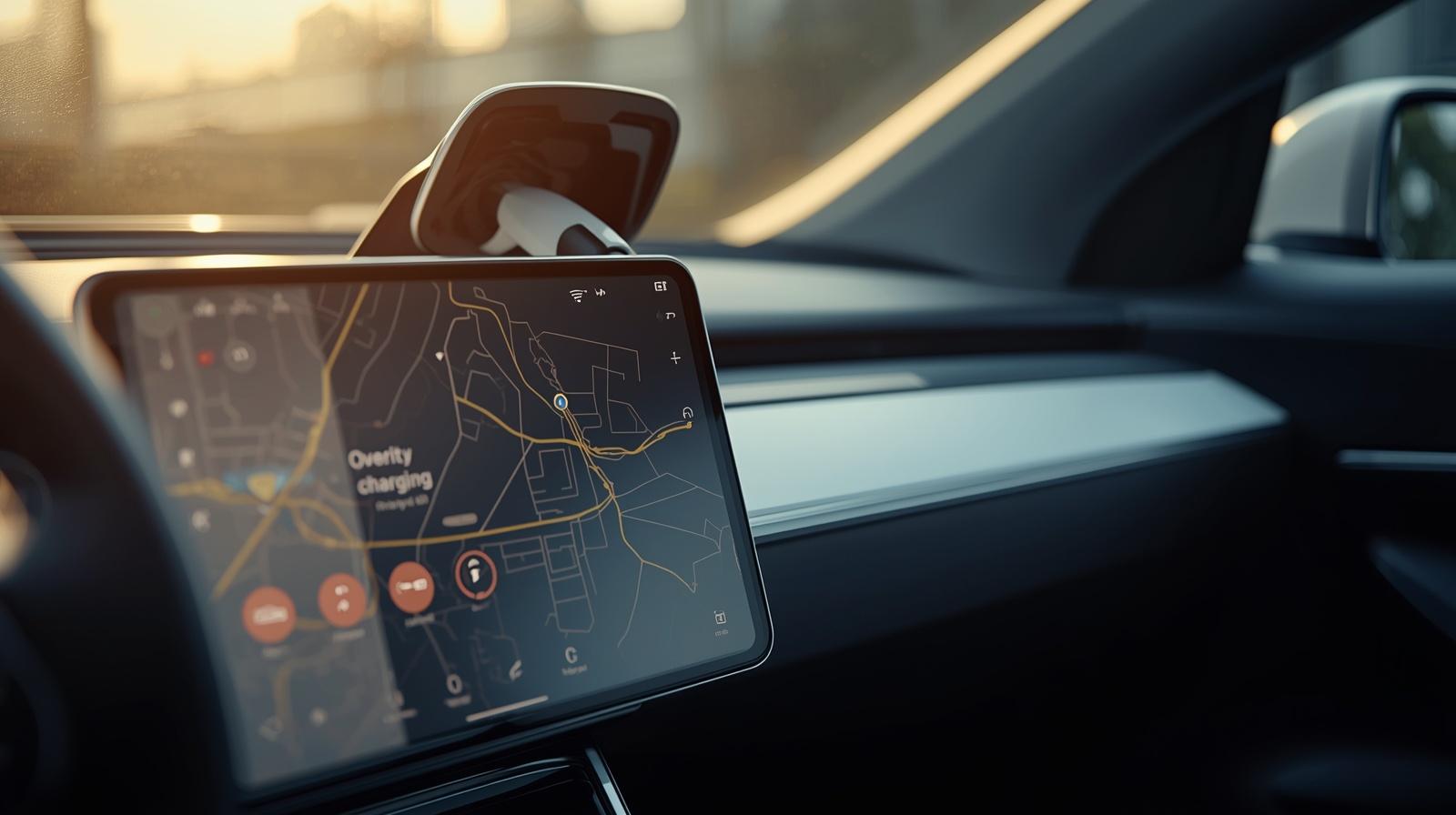
If you drive a Tesla Model 3, Tesla Model Y, Hyundai Kona Electric, or any other EV for Uber or Lyft, your charging strategy is your business strategy. The wrong app stack costs you hours of waiting at broken chargers, dead-end detours to stations that turned out to be ICE'd, and panic at 8 percent battery on the way to an airport pickup.
The right app stack quietly runs in the background and keeps you charged, on time, and earning.
Here are the apps every US EV rideshare driver should actually have on their phone in 2026, with the honest take on which ones matter and which ones don't.
1. PlugShare (Free, $9.99/year Premium)
If you only install one EV app, install this one. PlugShare is the de facto global directory for public charging stations, but the real value is the community.
Every charger on the map has check-ins, photos, and reviews from real EV drivers. You can see whether a station worked an hour ago, whether stalls are broken, whether the parking spot is blocked by an ICE vehicle, and whether the access is real or behind a locked gate.
Independent testing shows PlugShare achieves around 94 percent accuracy on station status, compared to 70 to 80 percent for apps that rely on automated feeds.
For rideshare drivers specifically: this is what saves you when your default network has a broken charger and you need an alternative within five minutes.
Filter by plug type (CCS for Hyundai Kona, NACS for Tesla, J1772 for Level 2), power level, and network. Premium is $9.99/year and unlocks advanced filtering. The free version covers most needs.
2. A Better Routeplanner / ABRP (Free, $4.99/month Premium)
ABRP is the engineer of the EV app world. It models your specific vehicle's range, battery curve, weather conditions, elevation changes, and even your driving style to plan routes with optimal charging stops.
For rideshare drivers, ABRP matters most for two situations:
Out-of-town airport runs that push your battery range End-of-shift planning when you need to charge before the morning rush
Plug in your starting battery percentage, your destination, and ABRP tells you exactly which chargers to hit, how long to wait, and what battery percentage you will arrive with.
Premium ($4.99/month) connects to your vehicle for live battery data. Most rideshare drivers can skip Premium and use the free version effectively.
3. The Tesla App (Tesla Drivers Only)
If you drive a Tesla, the Tesla app is your default. It handles Supercharger navigation, payments, and pre-conditioning before you arrive.
Tesla's in-car navigation is genuinely the best of any EV manufacturer for routing to Superchargers. For Tesla rideshare drivers, the workflow is simple: let the car plan Supercharger stops, use PlugShare as a backup for non-Tesla charging options.
Worth noting: Tesla's Supercharger network is now open to many non-Tesla EVs via the NACS connector adapter. If you drive a Hyundai Kona with the right adapter, Tesla Superchargers are now in play for you too.
4. ChargePoint App (Free)
ChargePoint operates one of the largest Level 2 charging networks in North America. The app is your access key to all of them, plus a growing number of DC fast chargers.
For rideshare drivers, ChargePoint matters most for:
Apartment and home charging (if you live somewhere with ChargePoint Level 2 stations) Slow charging during long airport queues at airports where ChargePoint stations exist Workplace charging if your local employers have ChargePoint installations
Free to use, pay-per-session pricing varies by location.
5. Electrify America (Free)
If you drive a Hyundai Kona, this app matters. Hyundai includes free Electrify America charging credits with new EV purchases, and the network covers most major US highway corridors with 150kW+ fast chargers.
The app handles payments, station activation, and live availability. Reliability has historically been mediocre but improved significantly in 2024-2025.
6. EVgo (Free)
The third major fast-charging network worth knowing. Strong in California, Texas, and major metros. Many EVgo stations now use NACS connectors, making them Tesla-compatible.
For rideshare drivers in markets where EVgo has good coverage, having the app installed is worth the 30 seconds it takes.
The Setup That Actually Works
After watching how full-time EV rideshare drivers actually use these tools, here is the working stack:
PlugShare as the primary "is this charger working" reference ABRP for any trip planning beyond your normal coverage area Your network app (Tesla, ChargePoint, EVgo, Electrify America) for actual payment and activation Waze or Google Maps for the actual driving navigation
That's four apps that quietly handle 95 percent of what an EV rideshare driver needs.
A Practical Reality Check
The honest truth about EV rideshare in 2026: it works great if you can charge at home overnight at residential rates. It works marginally if you depend entirely on public DC fast charging at near-gas-equivalent prices.
Tesla Model 3 home charging in California: roughly 4 cents per mile. Tesla Model 3 Supercharger only: closer to 12 to 15 cents per mile. Hyundai Kona on Electrify America paid sessions: 10 to 14 cents per mile.
Compare that to a Toyota Camry Hybrid getting 51 MPG at $3.50/gallon: about 7 cents per mile.
The math only works if you can charge cheap at home. Run the numbers for your specific situation before assuming EV equals savings.
The Bigger Picture
EV rideshare drivers face the same long-term pressures every driver faces in 2026: algorithmic pay compression, robotaxi competition, and platforms optimizing humans out of the equation where they can.
The smart move is the same regardless of what you drive: build income outside the apps. Direct clients, repeat passengers, corporate accounts, hotel concierge partnerships. Tools like RideShareGuides.com offer free digital business cards and driver IDs built specifically for US rideshare drivers building this kind of direct booking business alongside their platform work. EV drivers especially benefit because the predictability of direct clients (who often book hours or days ahead) lets you plan charging around real demand instead of guessing.
Charge smart, drive smart, and build the business under the business.
Comments
Sign in to join the conversation
Sign In