Rideshare Drivers on the Brink: Gas Prices Push the Industry to a Breaking Point
MMidas Jack
3 min read
1 views
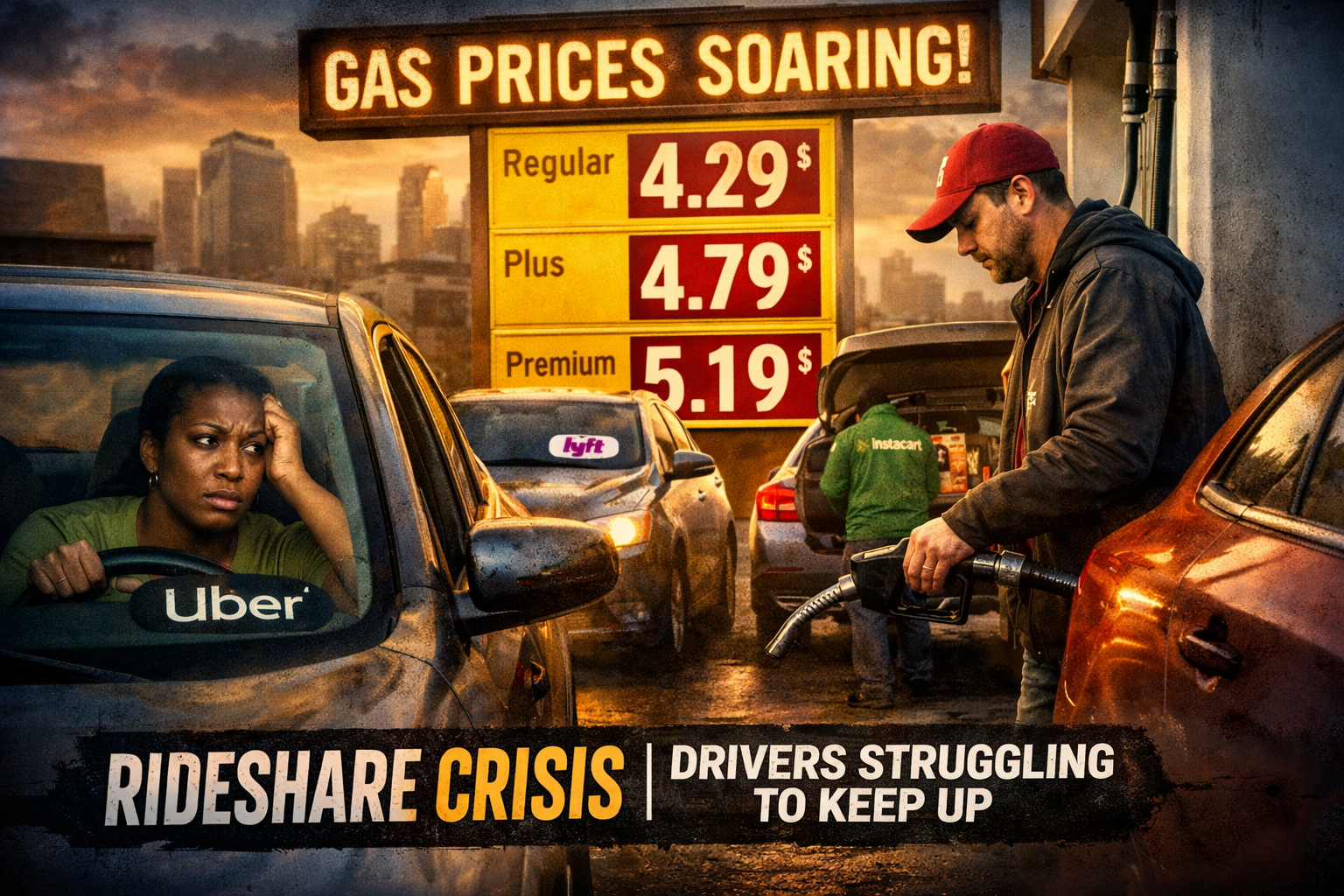
Rideshare Drivers on the Brink: Gas Prices Bring the Industry to Its Limit
For the rideshare business, there is an inherent balance between cost and demand. With gas prices reaching beyond $4 per gallon across the country, at its highest levels since 2022, many drivers in services like Uber, Lyft, DoorDash, and Instacart are rethinking their involvement in the gig economy.
The Human Toll of Rising Fuel Costs
Consider Tamira Moncur, an Atlanta-based schoolteacher who is also a Lyft driver on a part-time basis. She confessed to skipping refueling her vehicle last month owing to lack of money. “When it’s four dollars a gallon, that’s all she wrote,” said CNN. This anecdote mirrors others throughout the United States as drivers feel the pinch of soaring fuel prices amidst stagnant wages.
Leanne Hall, an Uber driver in Las Vegas, put it bluntly: “I do rideshares to make money. And if gas prices keep going up, it’d be foolish to do it.”
Why Prices Are Spiking
The recent conflict between the US and Israel with Iran interrupted 20% of the global oil production, pushing up the price of crude oil beyond the $100-per-barrel mark. Gasoline, which is derived from crude, has consequently seen its cost increase by about $30 per gallon over just a few weeks past.
According to GasBuddy, Americans collectively spent over $8 billion more on fuel in the past month alone. For gig workers who rely on their cars, that’s a devastating blow.
Platform Responses: Too Little, Too Late?
Incentive programs using the debit card approach include Uber providing cash back at the rate of $1 per gallon through the Upside program, Lyft offering 2% cash back on rides, DoorDash paying 10% back, and Instacart giving $5 each week to drivers that drive over 125 miles.
But here’s the catch: The majority of drivers are unaware of such programs, and not many possess the unique cards required for utilizing these facilities. While back in 2022, Uber and Lyft introduced a fuel surcharge of fifty cents for each ride, today’s initiatives seem patchy and insufficient for the majority of drivers.
What Drivers Want
The drivers’ demands are very clear: Either the per mile rate is increased or there are fuel charges. As suggested by Hall, “We should have an extra dollar per mile paid to us for every ride, but that’s not happening.” Some think that the company should increase the drivers’ earnings when fuel prices soar. Some have even suggested that the government intervene, although different people hold varying views.
The Bigger Picture
The current situation shows how fragile the gig economy is. Whenever external factors such as wars or inflation affect the global economy, it’s the drivers, not the companies, who bear the brunt of the impact. Without any help, many might simply quit, leaving fewer choices for the riders.
RSG: The Infrastructure Behind Driver Independence
The key to this discussion lies in RSG of RideShareGuides.com – the platform that empowers drivers to succeed individually. RSG is the platform that gives you a verified professional identity to book directly at your full price, a professional profile to get found by corporate clients, and the means to directly book so that you can collect your entire fee instead of the 60% you will get when 40% goes to platforms.
The challenge is whether the rideshare companies will offer any relief or continue to burden their drivers with the problems of global uncertainty. In the current context, the industry finds itself at a critical juncture, and its actions in the next few months may redefine its future trajectory.
Share
Comments
Sign in to join the conversation
Sign In