Uber and Lyft Are Taking 40 Percent of Your Fare : The Platform Cut Most Drivers Never Calculated
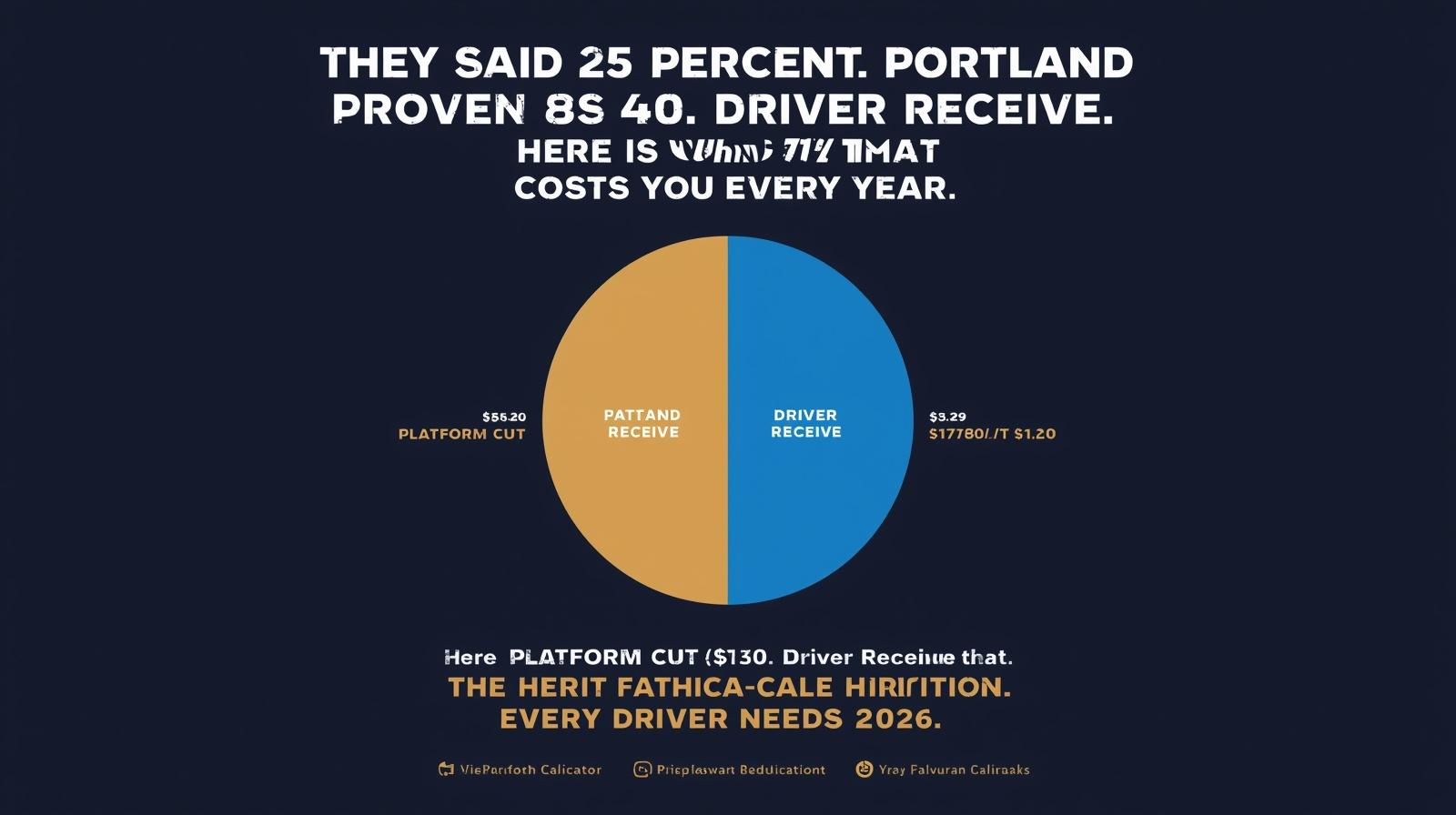
The Number That Changes How You See Every Ride You Complete
There is a number buried in a Portland city council proposal published this week that every rideshare driver in America needs to stop and calculate for themselves.
Not a regulation. Not a policy. A percentage.
At times the companies take more than 40 percent of the fare. OPB
Forty percent.
Not the 25 percent that platform marketing materials have historically suggested. Not the reasonable service fee framing that onboarding documents use when new drivers are deciding whether to sign up. Forty percent — and sometimes more — of the fare that the passenger paid for the ride you just completed.
The Portland proposal that revealed this number would cap the platform cut at 20 percent. Uber said the proposal would force them to exit Portland when the ordinance takes effect. "This proposal would force Uber to exit Portland when the ordinance takes effect," an Uber spokesperson said. OPB
Read that response carefully. Uber is saying that a cap at 20 percent — which would still leave them 20 cents of every dollar the passenger pays — is so financially damaging that they would rather abandon Oregon's largest city than comply with it.
Which tells you something specific about how much of that 40 percent is profit rather than operational necessity.
The Calculation Most Drivers Have Never Done
Most drivers know the platform takes a cut. Few have calculated what that cut actually represents in annual income — not as a percentage but as real dollars that leave your account before you ever see them.
Here is the specific math.
A full-time driver completing 1,200 rides per year at an average passenger-paid fare of $18 generates $21,600 in total passenger payments annually.
At a 25 percent platform cut — the figure most drivers assume — the platform takes $5,400 per year. The driver receives $16,200.
At a 35 percent platform cut — the middle of what Portland's data suggests actually happens — the platform takes $7,560 per year. The driver receives $14,040.
At a 40 percent platform cut — the high end of what Portland's council documented — the platform takes $8,640 per year. The driver receives $12,960.
The difference between the 25 percent cut most drivers assume and the 40 percent cut that Portland documented is $3,240 per year. From the same rides. From the same hours. From the same passengers paying the same fares.
That $3,240 did not go to fuel costs or insurance or platform maintenance. It went to the platform.
Why You Cannot See the Real Number
The platform cut is not a fixed transparent percentage that appears on every earnings statement. It is a variable that changes by ride type, market, time of day, demand conditions, and a set of algorithmic factors that the platform does not disclose to drivers.
For those times when drivers have a rider in the car Uber and Lyft have both publicly stated that drivers in Portland make $30 or more per hour. OPB
The $30 per hour figure refers to active ride time — the time when a passenger is in the vehicle. It does not reflect the dead time between rides, the positioning drives, the fuel costs, or the platform cut's effect on net income.
The deliberate opacity of the actual platform cut percentage is not accidental. A driver who knows their platform takes 40 percent of every fare is a driver who is motivated to find alternatives. A driver who vaguely understands that the platform takes something is a driver who keeps completing rides without calculating what they are actually working for.
What the Portland Fight Means for Drivers Everywhere
Some ride-hailing drivers applaud the effort and have continually told city council how challenging it is to make ends meet. The proposal has yet to be scheduled for a council vote. OPB
Portland is not the first city to attempt platform cut regulation and it will not be the last. New York City has minimum pay standards. Seattle has earnings floors. Minnesota enacted driver earnings legislation. The regulatory momentum toward transparency and fairness in platform economics is real and building.
Portland's most prominent business lobbying group is coming out against a ride-hailing wage increase proposal. The Portland Metro Chamber which represents more than 2,300 businesses in the region opposes the proposal. OPB
The opposition is organized and well-funded. The platforms' threat to exit is the same playbook used in every city that has attempted driver pay regulation — and it has not consistently produced the platform exit that the threat implies. Uber and Lyft left Austin in 2016 over fingerprinting requirements and returned two years later. They threatened to leave New York City over minimum pay requirements and remained.
The threat is leverage. It is not always a promise.
The Two Responses That Actually Protect Your Income
Understanding the platform cut problem produces two specific responses — one collective and one individual.
The collective response is supporting the regulatory advocacy that is spreading from Portland to cities across the country. Contact your city council representative. File public comments with your transportation regulatory agency. Join the driver advocacy organizations in your market that are pushing for platform cut transparency and caps. The Portland fight matters to drivers in Atlanta and Denver and Nashville and Houston because the regulatory precedent it sets travels.
The individual response is the one that protects your income regardless of what happens in any city council chamber.
Every direct booking client you build is a client whose fare you receive without a platform cut. The corporate account that pays you $75 per airport transfer puts $75 in your account — not $45 after the platform takes its 40 percent. The medical transport relationship that generates consistent weekly income operates entirely outside the platform fee structure. The standing arrangement with the family who books you for their teenager's school runs produces income that no algorithm touches.
There are between 1.5 and 2 million rideshare drivers working in the U.S. and for most of them it is becoming difficult to turn a profit. Inc
The profitability crisis that $4 gas and a 40 percent platform cut simultaneously produce has one specific solution at the individual level — reducing the percentage of your income that is subject to the platform's cut.
Your RSG profile at rideshareguides.com is the infrastructure that makes that reduction possible — the verified professional identity that enables direct bookings at your full rate, the direct booking mechanism that bypasses the platform cut entirely, and the professional presence that makes corporate clients, medical facilities, and standing arrangement clients find and trust you specifically.
The platform is taking 40 percent of your fare.
Every direct booking client you build takes that number back.
Calculate what you are actually earning. Build the income they cannot cut. 🚗💰⚖️
Comments
Sign in to join the conversation
Sign In