Gas at $4+ a Gallon: The 2026 Survival Guide for Uber & Lyft Drivers
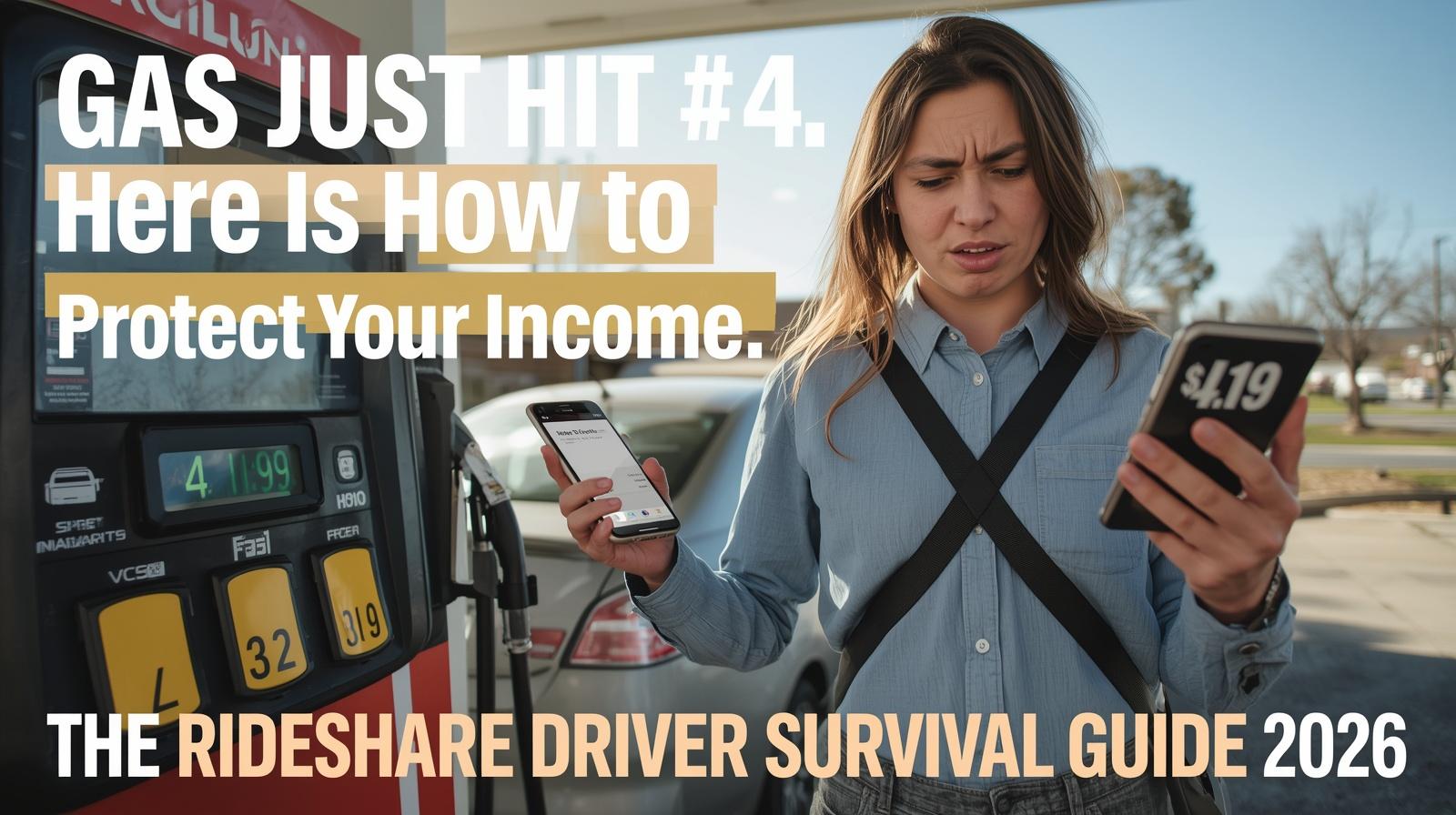
If you're driving for Uber or Lyft right now, you already feel it at the pump. Your wallet is lighter, your shifts are longer, and the math is getting harder every week. You are not alone — and more importantly, you are not out of options.
This is the real, no-fluff guide to surviving (and actually profiting through) the 2026 gas price crisis.
Why This Crisis Is Different From 2022
The last time gas prices exploded like this was in 2022, after Russia invaded Ukraine. Back then, both Uber and Lyft added a 50-cent fuel surcharge per ride that was paid directly by passengers. Drivers got real, visible help.
This time? The crisis is bigger — the national average has crossed $4/gallon for the first time since 2022, and in California the average is nearly $6/gallon, with some stations charging over $8. But instead of passenger surcharges, Uber and Lyft are offering cash-back programs and debit cards.
Here's what Margarita Penalosa, a full-time LA driver, told the LA Times: in 2017 she hit $300 in 8 hours easily. Today she's pulling $250 after 14 hours — roughly $11/hour after gas and maintenance.
That is the reality. Now let's talk about what actually works.
Part 1: Stack Every Gas Discount You Can (It's Up to $1.44 Off Per Gallon)
Most drivers interviewed by CNN recently admitted they'd never even heard of the gas discount programs — and none of them had the right cards. Don't be that driver. Here's the stack, current through May 26, 2026:
For Uber Drivers & Couriers
Uber Pro Card — Up to 15% cash back at any gas station in the U.S. (5% base + 3% extra at Exxon/Mobil + more at Mastercard Easy Savings stations).
Upside app — Up to $1.00 off per gallon based on your Uber Pro tier (up from the previous 25¢ max).
Shell Fuel Rewards — Up to 21¢ off per gallon at Shell stations.
Stack all three and top-tier drivers can save up to $1.44 per gallon. On a 15-gallon fill-up, that's over $21 saved per tank.
For Lyft Drivers
Lyft Direct debit card — Cash back at eligible gas stations (percentage varies by tier).
Lyft has also expanded its gas relief program through May 26, 2026.
Action step:
If you don't have the Uber Pro Card or Lyft Direct card yet, apply today. Most drivers are leaving real money on the pump every single day.
Part 2: Drive Smarter, Not Longer
AAA research shows that gradual acceleration alone can boost your fuel efficiency by 10–40%. For a driver doing 200 miles a day, that's a game-changer. Here are the habits that separate profitable drivers from burned-out ones:
Ease into acceleration. Jackrabbit starts burn gas fast. Pretend there's an egg under your gas pedal.
Coast to stops. Heavy braking means you wasted gas getting to that speed in the first place.
Cut idle time. Engine off if you're waiting more than 60 seconds (airport queues, long pickups). Idling burns roughly half a gallon per hour.
Lighten the car. Empty that trunk. Every 100 extra pounds drops your MPG by about 1%.
Use AC wisely. At city speeds, windows down saves fuel. On highways above 45 mph, AC is actually more efficient than drag from open windows.
Check tire pressure weekly. Underinflated tires can cost you 3% on fuel economy. Buy a $10 gauge — it pays for itself in a week.
Skip premium fuel. Unless your manual specifically requires it, regular gas is fine. Premium is just more expensive — not more efficient.
Part 3: Be Picky About Rides (This Is the Big One)
Here's the mindset shift most new drivers never make: not every ping is worth accepting.
Top drivers now openly say they're cutting hours and getting selective. In this economy, your job is no longer to drive — it's to manage a small transportation business. That means evaluating every trip on three questions:
How far is the pickup? A 12-minute drive to pick up a $7 fare is a losing deal. You're burning gas and time for nothing.
Where does the trip end? A ride that drops you in a dead zone with no return fare is a double loss.
Is it surge or standard? Surge rides can double or triple your effective hourly — wait for them during rush hours, events, and weather disruptions.
The "Dead Miles" Rule
Dead miles (unpaid driving to pickups and returning from drop-offs) are the silent killer of rideshare earnings. If dead miles exceed 30% of your total miles, your business is bleeding fuel money. Track it.
Part 4: Know Your Real Hourly Rate
Most struggling drivers don't actually know what they earn per hour after expenses. Here's the simple formula:
Real Hourly = (Gross earnings - Gas - Maintenance - Depreciation) ÷ Hours workedA quick example for a 10-hour day:
Gross earnings: $220
Gas (30 gallons × $4.00): $120
Maintenance + wear & tear (IRS estimates ~67¢/mile total vehicle cost): varies
Take home: Often under $100 for 10 hours of work
If your real hourly is below your state's minimum wage, it's time to change strategy — not work more hours.
Tools that help: Apps like TripLog, Stride, or Gridwise automatically track miles, gas, and calculate your real MPG and hourly rate. Most are free or under $10/month — one of the highest-ROI tools a driver can use.
Part 5: Should You Switch to a Hybrid or EV?
If you're driving full-time, this might be the single biggest move you can make in 2026. Consider:
Honda Accord Hybrid (2026) — Up to 51/44 MPG city/highway. Named a top pick for rideshare drivers by U.S. News.
Toyota Prius / Prius Prime — Long-proven rideshare workhorse with 50+ MPG.
Hyundai Kona Electric — Zero gas costs, low maintenance, qualifies for Uber Green bonuses.
Do the math: If you burn 30 gallons a day in a standard sedan (~25 MPG), switching to a hybrid at 50 MPG cuts your fuel bill in half. At $4/gallon, that's $60/day saved — roughly $15,000/year for a full-time driver. A used hybrid often pays for itself in under 18 months.
Uber also offers extra incentives for drivers who switch to electric vehicles, and Uber Green riders typically tip more.
Part 6: What's Next — And When Will Prices Drop?
Don't hold your breath. Moody's chief economist Mark Zandi put it best: "Prices rise like a rocket and fall like a feather." Even with the Strait of Hormuz reopened, it will take months for gas prices to normalize.
In the meantime, there's a possible upside: if enough drivers quit, Uber and Lyft will be forced to raise fares to keep supply on the road. The drivers who stay disciplined right now will benefit most when that happens.
Comments
Sign in to join the conversation
Sign In