Robotaxis Are Coming for Your Market: A US Rideshare Driver's Survival Guide for 2026–2027
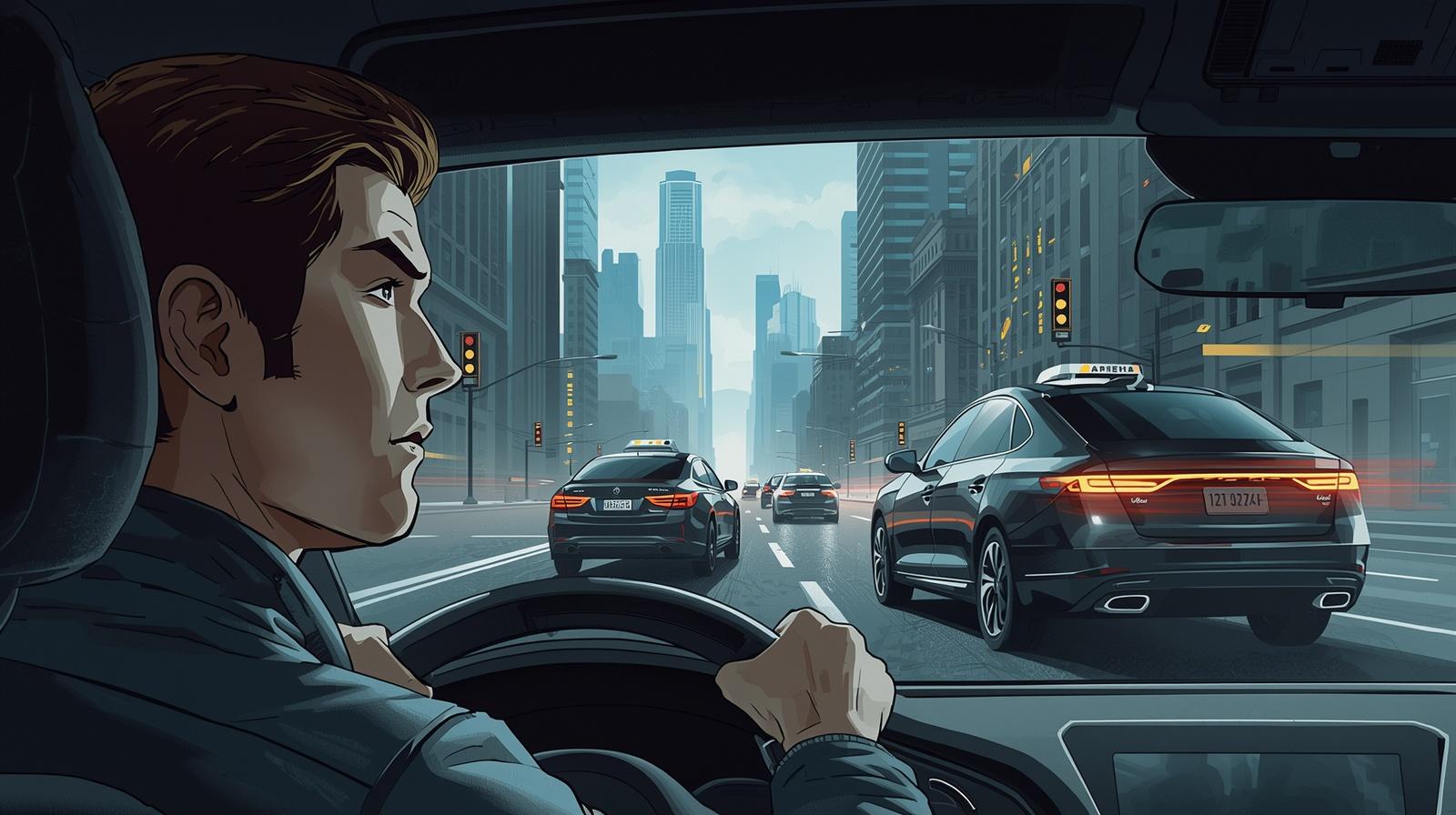
The conversation every rideshare driver is having with themselves but nobody wants to write about: are robotaxis going to take my income away?
The honest answer based on the data we have in 2026 is: not all at once, not everywhere, but yes, in some markets, the squeeze has already started. And in the next 18 months, it's going to expand to a lot more cities.
I'm going to walk through the real numbers from the latest reports, what the major players are actually doing right now, what's coming in 2026 and 2027, and most importantly what working US drivers can actually do about it. This isn't a panic post. It's a working driver's read on a transition that's already underway.
If you drive in Atlanta, Austin, Los Angeles, Phoenix, or San Francisco, this is happening to your market right now. If you drive somewhere else, your turn is probably coming within the next two years. Knowing what's real and what to do about it matters more than ever.
What's Actually Happening Right Now
Let me start with the hard data, not the hype. Gridwise Analytics' 2026 Autonomous Vehicles Impact Report, released in January 2026, gives us the clearest picture of what's actually happening to human drivers in markets where robotaxis are now live.
The five cities with active commercial robotaxi deployments as of early 2026: Atlanta, Austin, Los Angeles, Phoenix, and San Francisco.
Comparing Q4 2025 to Q4 2024, here's what Gridwise found:
Trips per hour for human drivers fell 5.3% in AV markets : compared to 2.6% nationwide. That's nearly twice the national decline.
Los Angeles saw the steepest hit : trips per hour dropped almost 10% year-over-year.
Hourly gross pay went up 1.8% nationally : but it dropped in three AV markets: Los Angeles -3.7%, San Francisco -1.7%, Phoenix -0.4%.
Atlanta and Austin showed productivity declines too, though the earnings hit was less severe than LA.
In plain English: in cities where Waymo, Zoox, and other robotaxis are running commercially, human drivers are getting fewer trips per hour, and in the largest robotaxi market (LA), drivers are also earning measurably less per hour than they were a year ago.
This is the first time we have hard numbers showing AV deployment correlating with human driver earnings declines in specific markets. It's not a study of opinions or projections ,it's actual driver data.
The Players: Who's Doing What in 2026
To understand what's coming, you need to know who's actually on the road and what their plans are.
Waymo (Alphabet/Google). The clear leader. Operating over 250,000 paid rides per week across five US cities as of early 2026. Plans to expand to 15+ cities by end of 2026, including London. Currently active commercially in San Francisco, Phoenix, Los Angeles, and Austin, with Atlanta partnership through Lyft. Just announced robotaxi service launching in Nashville with Lyft.
Tesla. Began commercial autonomous ride-hailing testing in Austin in June 2025. Aggressive pricing strategy iis itial reports show Tesla undercutting Waymo significantly to capture market share. The biggest wildcard in the space because of Tesla's existing manufacturing scale.
Zoox (Amazon-owned). Launching ride-hailing service in San Francisco and Las Vegas during 2026. Custom-built autonomous vehicles (no traditional driver seat). Targets dense urban deployment.
Uber + Nuro + NVIDIA. Uber announced robotaxi launch in the San Francisco Bay Area for late 2026, using Nuro's autonomous driving system on Lucid Gravity electric SUVs with NVIDIA's AI architecture. Uber plans to scale to 100,000 autonomous vehicles globally starting in 2027.
Lyft + Waymo + May Mobility. Lyft is partnering with Waymo for Nashville (2026 launch) and with May Mobility for Atlanta. Lyft also has a major NVIDIA partnership announced at GTC 2026 covering AI infrastructure, mapping, and future autonomous fleet architectures.
Apollo Go (Baidu). Has completed 14 million autonomous trips in 16 Chinese cities. Entering global markets via Uber partnership starting in 2026.
What this means: by the end of 2026, the list of cities with active commercial robotaxi service is going to roughly triple. By the end of 2027, robotaxis will be a normal sight in nearly every major US metro.
How Bad Will the Impact Get?
Here's where the numbers get more reassuring than the headlines suggest.
S&P Global projects autonomous vehicles need to operate at roughly $1 per mile to scale sustainably. Right now, none of them are profitable at that price. Uber's CFO publicly stated in August 2025: "AVs today are not profitable."
Even at full scale, parity between AV trips/miles and human-driven rideshare isn't expected until around 2040–2041 according to S&P modeling. Goldman Sachs estimates robotaxis will capture only about 8% of the US rideshare market by 2030, generating $7 billion in annual revenue (up from less than 1% today).
In other words: this is a slow squeeze, not a sudden replacement. The robotaxi rollout is happening, but human drivers are going to dominate US rideshare for years.
That said, "slow squeeze" still hurts the drivers it's squeezing. If you're in LA right now, your trips per hour are already down nearly 10% year over year. That's real money. And the squeeze will spread to more cities before it stabilizes.
What's Actually Happening to Driver Earnings (Beyond Just AVs)
Worth zooming out for context. Robotaxis aren't the only pressure on driver pay in 2026. According to the 2026 Annual Gig Mobility Report:
Customer prices rose nearly 10% in 2025
Driver pay grew less than half as fast
Hourly earnings across major platforms were largely flat year-over-year
Over 60% of consumers say they reduced rideshare usage due to pricing in 2025
Over 50% of consumers say they'd only use autonomous rideshare if it costs less
Translation: the platforms are taking a bigger share of customer payments while passengers are pulling back on ride frequency. Robotaxis just add another layer of pressure on top of an already squeezed driver income.
The Five Things Drivers Should Actually Be Doing Right Now
So what do you do about it? Here's the practical playbook based on what experienced drivers in AV-active cities are actually doing.
1. Build Direct Client Income Outside the Apps
This is the single most important move, and it's the one I've been pushing throughout this whole blog series. Robotaxis cannot replace your direct client relationships. Hotels, corporate offices, recurring airport runs, wedding transportation, medical appointments, school pickups , none of these are going to switch to a Waymo overnight.
The drivers who are insulated from the robotaxi squeeze are the ones who have a private book of business they own. Even 5–10 regular weekly clients can be the difference between making rent and not. Use the digital business card playbook. Build relationships with concierges, event planners, and small business owners. Treat your direct clients as the foundation, not a side hustle.
2. Multi-App More Aggressively
If your trips per hour are dropping, you can't afford to grind one platform anymore. Run Uber + Lyft simultaneously during peak hours. Add DoorDash for slow rideshare windows. The drivers who are still pulling solid weekly numbers in LA and Phoenix are almost universally multi-apping with discipline.
The dead minutes between rideshare pings which is already a problem before AVs the minutes the robotaxis are eating. Fill them with another platform's pings.
3. Specialize in Trips Robotaxis Can't or Won't Do
Some trip categories are either impossible or commercially unviable for robotaxis right now and for the foreseeable future:
Trips with luggage assistance : robotaxis don't help with bags
Trips with elderly or mobility-limited passengers :human assistance matters
Trips with infants and child seats : most robotaxi services don't accommodate this
Trips outside of geofenced zones : robotaxis can only operate in pre-mapped areas
Trips with multiple stops or detours : robotaxis handle this poorly
Trips with pets : most AVs don't allow them
Long-distance trips outside metro cores : robotaxis are urban-only
Premium tier trips (Uber Black, Lyft Lux) : human drivers are the differentiator
Trips during weather extremes :robotaxis often shut down in heavy rain or snow
The drivers thriving in AV markets are positioning themselves intentionally around these categories. If your market has Waymo running, become the airport-luggage driver. Become the wheelchair-accessible vehicle (WAV) operator. Become the pet-friendly Comfort driver.
4. Move Up the Tier Stack
If you've been driving on UberX or Lyft Standard, this is the year to consider what it would take to qualify for Uber Comfort, Uber Premier, Uber Black, or Lyft Lux. Premium tiers pay 30–100% more per ride and they're far less vulnerable to robotaxi competition because the value proposition is the human driver.
Yes, this often means buying or leasing a different vehicle. But the math has changed. In an AV-active market, an UberX driver earning declining hourly rates is competing with an army of robotaxis. An Uber Black driver with a Lexus ES Hybrid or a Toyota Highlander Hybrid is competing with a much smaller pool and serving a customer base that specifically wants a human.
5. Diversify Beyond Rideshare Entirely
The drivers I see who'll be best positioned for 2027 and 2028 aren't ones who plan to drive rideshare full-time forever. They're the ones who use rideshare income to build something else. A few real examples I've seen:
A Phoenix driver who saved aggressively for two years and bought a small fleet of TLC-plated vehicles to rent to other drivers — passive income from other drivers' shifts.
An LA driver who used her rideshare network to launch a corporate transportation service with a website, branding, and three contracted drivers under her own name.
An Austin driver who built up a YouTube channel about rideshare strategy, monetized it, and now makes more from content than from driving.
An Atlanta driver who used what she learned about local logistics to launch a small same-day delivery service for local boutiques.
None of these drivers quit rideshare cold turkey. They built secondary income streams gradually using the time, network, and knowledge their driving work gave them. By the time the squeeze gets serious, their income isn't 100% dependent on platform pings.
What NOT to Do
A few moves I've seen drivers make that almost always backfire:
1. Don't buy a Tesla expecting to "join Tesla's robotaxi network." Tesla's commercial robotaxi service uses Tesla-owned and operated vehicles, not customer-owned ones. The "FSD will let you make money while you sleep" pitch hasn't materialized into actual driver income.
2. Don't move to a market specifically because it doesn't have robotaxis yet. By the time you settle in and learn the market, robotaxis will likely arrive.
3. Don't blow your savings doubling down on driving. Some drivers respond to falling earnings by working more hours. That accelerates burnout without solving the underlying problem.
4. Don't ignore the data. The drivers in denial about robotaxis are the ones who'll be worst hit when the rollout reaches their market. Plan for what's coming, not what you wish was coming.
The Honest 2027 Outlook
Here's my honest read of where this goes through end of 2027:
Atlanta, Austin, LA, Phoenix, SF: Driver earnings continue declining 3–10% per year as robotaxi fleets scale. Multi-apping and direct clients become essential, not optional.
Bay Area expansion: Uber's Nuro robotaxis launch late 2026. Driver squeeze in SF/Oakland/San Jose intensifies through 2027.
New AV markets in 2026: Las Vegas (Zoox), Nashville (Lyft + Waymo). Driver impact will be measurable by end of 2026.
Anticipated 2027 expansion: Miami, Houston, Dallas, Seattle, Denver, Chicago, Boston, Washington DC are likely robotaxi expansion targets based on company filings and partnerships.
NYC: Slower rollout because of TLC regulatory complexity. Likely 2028 or later for commercial robotaxi service.
Suburbs and smaller cities: Largely unaffected through 2027. Robotaxis are a dense-urban-center play for the foreseeable future.
Most affected driver categories: Standard UberX and Lyft Standard drivers in dense urban core markets.
Least affected categories: Premium tier drivers, suburban drivers, drivers with strong direct client bases, drivers in markets robotaxis don't yet serve.
A Final Note
Robotaxis are here. They're not going away. And in some markets, they're already cutting into human driver earnings in ways the data is now starting to show clearly.
But this isn't the end of human rideshare driving. It's a transition into a different kind of human rideshare driving. The drivers who'll thrive through 2027 and 2028 aren't the ones who pretend nothing is changing. They're the ones who build direct client relationships, diversify income streams, move up the tier stack, multi-app aggressively, and treat themselves as actual independent business owners not pawns of a platform algorithm.
If you've been reading this blog series, you already have most of the playbook. Tax discipline. Insurance protection. Multi-app strategy. Building repeat clients. Smart vehicle choice. Tech tools. Now apply it with urgency, not casually. The drivers who treat 2026 and 2027 as "set up to survive 2028 and beyond" will be the ones still standing.
Drive smart. Build the business under the business. Prepare for what's coming, not what you wish was coming.
This guide is based on the Gridwise Analytics 2026 Autonomous Vehicles Impact Report, the 2026 Annual Gig Mobility Report, public statements from Uber, Lyft, Waymo, Tesla, Zoox, and Nuro, and Goldman Sachs and S&P Global market projections. Robotaxi rollout schedules and driver impact will continue to evolve verify the latest deployment status in your market via your platform apps and local news.
Comments
Sign in to join the conversation
Sign In