🚘 Rideshare vs Delivery in 2026: Smart Pivot or Hidden Trap for Drivers?
DDavid Stark
4 min read
2 views
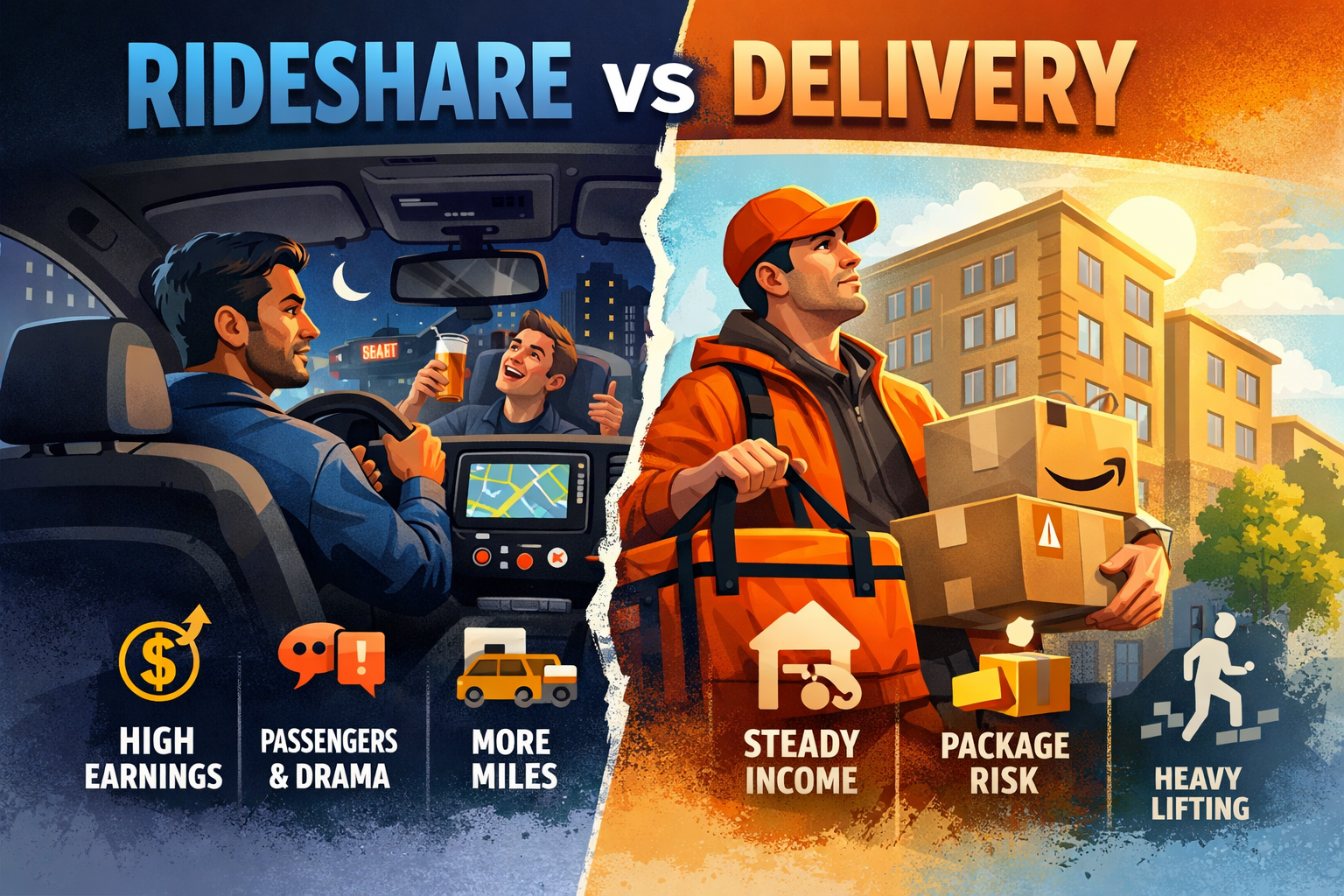
The idea sounds perfect at first.
No passengers. No drama. No late-night chaos. No false accusations.
Just picking up food or packages, dropping them off, and moving on.
For many drivers working with platforms like Uber and Lyft, switching to delivery seems like a clean escape from the stress of rideshare.
But in 2026, the reality is more complex—and if you’re serious about maximizing your income and freedom, you need to look deeper.
The Appeal of Delivery Work
Delivery platforms such as Uber Eats, DoorDash, and Amazon Flex have grown massively over the past few years.
At a glance, the benefits are obvious:
No dealing with difficult passengers
No awkward conversations
No risk of false complaints inside your vehicle
More control over your environment
For drivers who are burned out from rideshare, this feels like freedom.
But that freedom comes with trade-offs.
Comfort Isn’t What You Think
Rideshare can be mentally exhausting. Delivery, on the other hand, is physically demanding.
Instead of sitting in your car waiting for the next ride, you’re now:
Searching for parking constantly
Getting in and out of your car every few minutes
Climbing stairs and carrying items
Dealing with weather conditions all day
What you lose in stress, you gain in effort.
People vs Packages
Passengers can either make your day—or completely ruin it. That’s the nature of rideshare.
With delivery, you remove that uncertainty. Packages don’t argue, slam doors, or report you.
But there’s a downside:
No high-paying “unicorn” rides
Less human interaction (which some drivers actually enjoy)
Food deliveries can leave strong odors in your car
Spills and messes come out of your pocket
It’s quieter—but also more limited.
The Income Reality
This is where most drivers get it wrong.
Yes, delivery demand is high. But earnings behave differently.
Rideshare offers higher earning potential per trip
Delivery offers more consistent but capped income
You might have fewer “bad days” with delivery—but you’ll also have fewer breakout days.
Tips?
Still inconsistent
Slightly better than before, but far from reliable
Bottom line:
Rideshare has a higher ceiling. Delivery has a safer floor.
Expenses and Hidden Risks
One surprising advantage of delivery is reduced mileage. Many drivers report significantly fewer miles compared to rideshare.
That means:
Less wear and tear
Lower fuel costs
However, there’s a catch.
When you accept a delivery, you’re responsible for it.
Lose or damage a package?
You could be paying for it.
That risk doesn’t exist with passengers.
Flexibility: Not Always What It Seems
One of the biggest reasons drivers choose rideshare is flexibility.
But here’s the truth:
Rideshare flexibility depends on demand
Delivery flexibility depends on timing and platform rules
Some delivery services require:
Scheduled time blocks
Shift commitments
Limited availability windows
In some cases, you trade freedom for stability.
Safety Considerations
Safety is still a major factor in 2026.
Rideshare involves close, repeated human contact
Delivery reduces that—but doesn’t eliminate risk
You still:
Enter restaurants
Touch shared surfaces
Interact with customers at drop-off
The safest version of delivery?
Contactless package drop-offs.
Lifestyle Shift
Here’s something most drivers don’t expect:
Delivery changes how your day feels.
No passengers means:
No forced conversations
No rating anxiety
No constant social pressure
You control your music, your route, your environment—completely.
For many drivers, this alone is worth it.
The Bigger Picture: 2026 Trends
The rideshare industry isn’t what it used to be.
More drivers competing for fewer rides
Lower rider spending in many markets
Increasing platform control
At the same time:
Delivery demand continues to grow
E-commerce is stronger than ever
Hybrid driving is becoming the norm
The RSG Perspective: Don’t Choose—Adapt
At RideShareGuides (RSG), we see the most successful drivers doing something different.
They’re not choosing between rideshare and delivery.
They’re combining both.
They:
Switch between apps based on demand
Maximize earnings during peak hours
Use delivery to fill downtime
Build their own driver identity outside the apps
Because the real risk in 2026 isn’t choosing the wrong platform…
It’s relying on just one.
Final Thoughts
Switching to delivery isn’t a guaranteed upgrade—it’s a trade-off.
You gain peace, but lose upside.
You gain control, but take on different risks.
The smartest move isn’t switching completely.
It’s evolving your strategy.
And if you’re serious about building long-term independence as a driver, the goal shouldn’t just be to work smarter inside the apps…
It should be to build something beyond them.
Share
Comments
Sign in to join the conversation
Sign In