How to Future-Proof Your Rideshare Income Before the Robots Arrive in Your Market
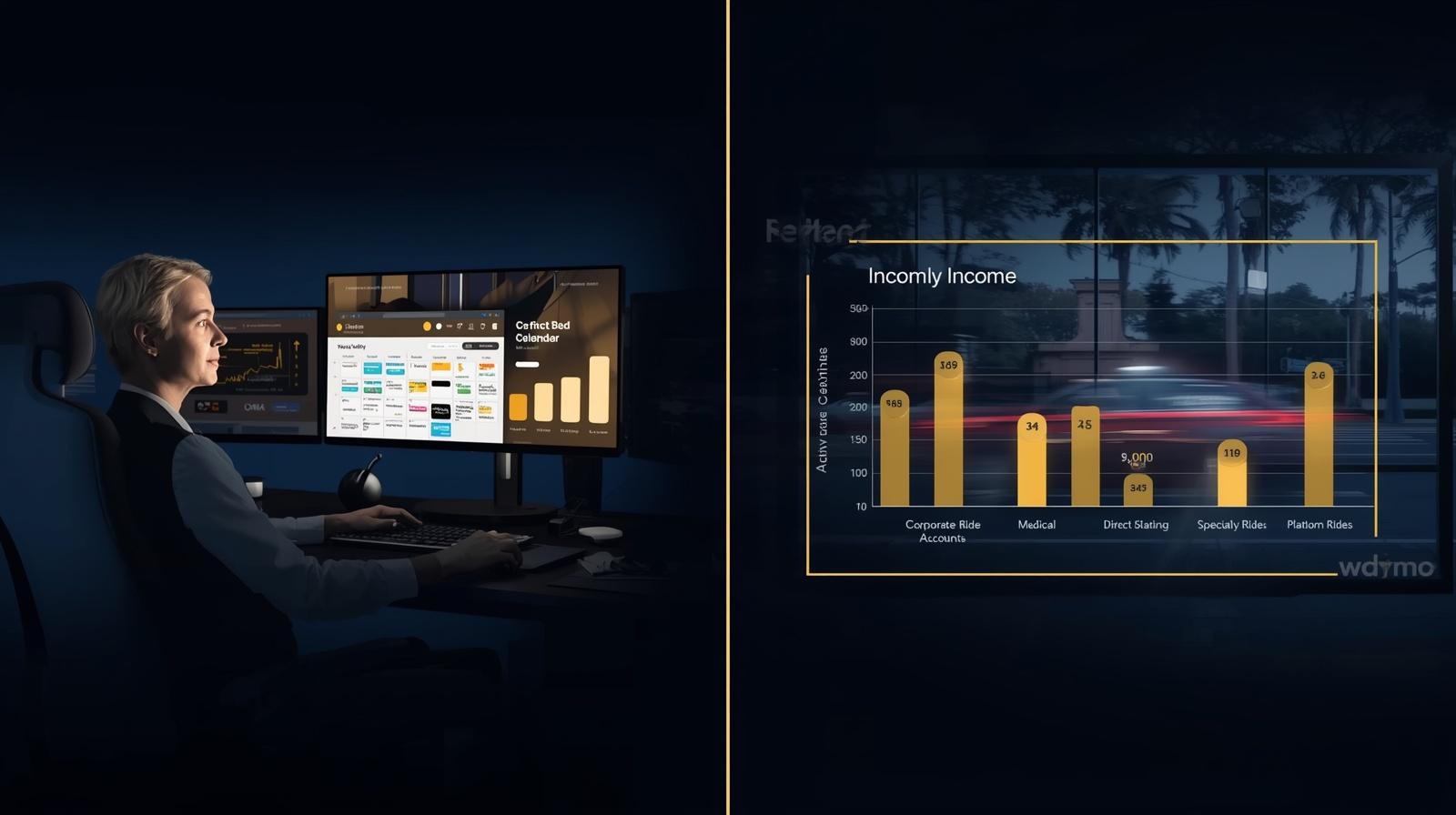
The Drivers Who Thrive in the Robotaxi Era Are Building Right Now. Here Is Exactly What They Are Building.
Two drivers. Same city. Same platform. Same vehicle class. Same rating.
One of them read the Waymo expansion announcement last month and felt the specific anxiety that every driver in America felt — the creeping recognition that the technology is real, the timeline is accelerating, and the income that has been reliable for three years is on a trajectory that ends somewhere uncomfortable.
The other driver read the same announcement and felt something different.
Not relief. Not denial. Not the false comfort of believing the transition is further away than it is.
Clarity.
Because the second driver had spent the previous eighteen months building something that the Waymo announcement does not threaten. Not because they are not paying attention to autonomous vehicles. Because they are paying attention to the right thing.
They are not building a rideshare career.
They are building a transportation business — one with clients who book them specifically, accounts that generate income on a schedule that does not depend on platform algorithms, and professional relationships that exist entirely outside the marketplace that autonomous vehicles are entering.
There is a quieter redistribution at work. Uber and Lyft circulate money through local communities. A driver in Phoenix pays rent in Phoenix, eats at restaurants in Phoenix, gets her car serviced in Phoenix. A Waymo vehicle does none of those things. Its fares flow to Alphabet's headquarters in Mountain View with more limited maintenance and fleet operations jobs in the communities it operates in. Quartz
The community economic argument is real and important. But the individual driver strategic argument is equally important and far more actionable.
A Waymo vehicle does not have a name. It does not remember that the corporate client prefers silence during the first fifteen minutes after a flight. It does not exercise the professional discretion that makes an executive trust their driver with the conversations that happen in the vehicle. It does not wait at the door until the elderly patient is safely inside before pulling away. It does not build the relationship that makes a family book the same driver for their teenager's school runs every week.
These are not sentimental arguments for the value of human connection. They are specific, financially quantifiable advantages that produce the income streams that autonomous vehicles cannot replicate — and that the drivers who are building them right now will have fully established by the time autonomous vehicles reach significant market share in their city.
This is the complete blueprint for building that income before the robots arrive.
The Timeline Reality — How Much Time You Actually Have
Before building the blueprint it is essential to establish a realistic assessment of your specific timeline — because the urgency of the building effort depends entirely on where your market sits in the autonomous vehicle deployment sequence.
Waymo currently provides roughly 400,000 paid rides per week across half a dozen American cities and expects to surpass one million weekly rides by the end of 2026. It quadrupled its trip volume in 2025 alone. Quartz
S&P Global estimates autonomous vehicles will account for about 10 percent of all US rideshare trips by 2030. Mexico Business News
Ten percent by 2030 is the mainstream financial analysis projection. Four years. And ten percent is not fifty percent — it is a meaningful market share that produces measurable income impact for human drivers while leaving ninety percent of trip volume with human operators.
The trajectory beyond 2030 is where the projections diverge significantly — the firm projects that driverless and human-operated rideshare services could reach parity by 2041 as autonomous fleets continue to scale across major metropolitan areas. Mexico Business News
2041 is fifteen years away. That is not a reason for complacency — it is a planning horizon. The drivers who treat 2041 as the deadline for building autonomous-vehicle-resistant income have misread the situation. The drivers who treat 2026 and 2027 as the window for building that income before meaningful market share arrives in their city are the ones who will look back at this period as the moment that defined their long-term financial trajectory.
Your specific timeline depends on your market. San Francisco and Phoenix drivers are already in the transition. Nashville and Washington D.C. drivers have one to two years. Chicago and Houston drivers have potentially three to five years before meaningful autonomous vehicle market share arrives.
Every market gets the same blueprint. The urgency of implementation varies by how close your market is to the deployment timeline.
The Blueprint — Five Income Streams That Autonomous Vehicles Cannot Take
The future-proofed transportation income is not built from one strategy. It is built from five specific income streams that collectively produce the financial resilience that no single stream can provide.
Each stream is available to every driver in every market right now. Each stream takes different amounts of time to build. And each stream becomes more valuable relative to platform income as autonomous vehicle market share grows in your city.
Income Stream One — The Direct Booking Client Base
This is the foundation of every future-proofed transportation income. It is also the stream that requires the most deliberate building effort and produces the most durable long-term return.
A direct booking client — a passenger who books you specifically, at your direct rate, through a mechanism that bypasses the platform entirely — generates income that is structurally immune to autonomous vehicle market share growth. Waymo's expansion in your city increases the platform's autonomous vehicle supply. It has no effect on the standing arrangement you have with a corporate client who books you every Monday morning and Thursday evening for their airport runs.
The specific direct booking client types that produce the most durable income and the strongest autonomous vehicle resistance are the ones covered throughout this guide — corporate travelers, medical transport clients, school and senior transportation clients, and hotel and event relationships. Each of these client types has specific characteristics that make them both high-value and structurally protected from autonomous vehicle competition.
The building timeline: A driver who implements the direct booking client development strategies consistently — the RSG profile at rideshareguides.com, the professional referral ask, the corporate outreach, the direct booking follow up system — can build a client base generating $1,500 to $3,000 per month in standing income within six to twelve months of consistent effort.
The autonomous vehicle resistance: Every dollar of standing direct booking income is a dollar that exists outside the platform marketplace where autonomous vehicles compete for ride assignments. The autonomous vehicle expansion in your market reduces the platform ride volume available to human drivers. It has zero direct effect on the direct booking income you have established with clients who specifically chose you.
Income Stream Two — The Corporate Account Portfolio
Corporate accounts are the highest-value and most durable income stream in independent transportation — and the one that autonomous vehicles are least capable of competing for in any near-term timeline.
A corporate travel manager who establishes a vendor relationship with a human professional driver is not purchasing transportation. They are purchasing a professional relationship with specific accountability, specific discretion requirements, and specific service standards that autonomous vehicle systems cannot satisfy.
Canadian robotaxi company Waabi announced it is partnering with Uber to deploy 25,000 robotaxis on the platform in a deal valued at $1 billion. CBS News
Those 25,000 robotaxis will compete for anonymous consumer platform rides. They will not be competing for the corporate vendor relationship with the law firm whose senior partners need reliable, discreet transportation for client meetings — because law firms do not establish vendor relationships with autonomous vehicle platforms. They establish them with vetted, verified, personally accountable transportation professionals.
The building timeline: The corporate account building process — the LinkedIn outreach, the vendor documentation, the trial ride, the service level agreement — takes two to four months per account from initial contact to established revenue. A driver who initiates contact with five corporate targets per month and converts at even a modest rate builds a portfolio of two to four established corporate accounts within six months.
The autonomous vehicle resistance: Corporate accounts are structured around professional relationships rather than algorithmic assignment. The autonomous vehicle that cannot be named in a vendor contract, cannot be held personally accountable for service failures, and cannot provide the professional discretion that corporate clients require is not a competitor for corporate account income. It is a competitor for the anonymous consumer rides that corporate accounts are specifically designed to replace.
Income Stream Three — The Specialty Transportation Practice
Specialty transportation — medical transport, executive protection, luxury event transportation, wine country and brewery tours, wedding transportation — generates income from service categories where human professional advantages are so pronounced that autonomous vehicle competition is not a near-term reality regardless of what happens to the standard platform ride market.
After clocking over 50 million miles Waymo reported 83 percent fewer airbag deployment crashes 81 percent fewer injury-causing crashes and 64 percent fewer police-reported crashes compared to human drivers in Phoenix and San Francisco. Thedriverlessdigest
These safety statistics are impressive and important. They also reflect Waymo's performance in standard road driving conditions — conditions that represent a subset of what specialty transportation requires. The dialysis patient who needs door-to-door assistance from their home to the medical facility and back requires physical presence, patience, and care that no safety statistic addresses. The executive protection client whose security requirements involve environmental awareness, discretion, and situational judgment has needs that no autonomous system currently satisfies. The wedding party whose transportation is an element of a once-in-a-lifetime event has expectations that require the human judgment and flexibility that autonomous vehicles cannot provide.
The building timeline: Each specialty transportation category has a different development timeline — medical transport broker applications take two to four weeks to process, corporate executive relationships take two to four months to establish, event transportation vendor relationships require one to two seasons to build a referral base. A driver who begins developing one specialty category per quarter builds a diversified specialty practice within a year.
The autonomous vehicle resistance: Specialty transportation income is protected by the specific service requirements of each category — requirements that autonomous vehicles cannot satisfy regardless of their ride-hailing performance metrics. The specialty driver who has built medical transport relationships, executive account relationships, and event transportation connections has income that exists entirely outside the standard platform ride market where autonomous vehicle competition is concentrated.
Income Stream Four — The Professional Referral Network
The referral network — the system of hotel concierges, corporate travel managers, event planners, medical social workers, and driver peers who generate client introductions — produces income without additional driving miles and is completely impervious to autonomous vehicle competition because it is built on human professional relationships rather than algorithmic ride assignment.
A hotel concierge who trusts a specific driver and refers their VIP guests is not going to switch that referral to an anonymous autonomous vehicle regardless of how the platform's ride assignment evolves. The referral is built on personal trust, demonstrated professional standard, and the concierge's confidence that the driver they recommend will represent their professional judgment well.
The building timeline: Each referral relationship takes two to four professional interactions to establish and begins generating referrals within thirty to sixty days of the relationship's formation. A driver who establishes one new professional referral relationship per month builds a network of twelve referral sources within a year — a network that generates new client introductions indefinitely without additional marketing effort.
The autonomous vehicle resistance: The referral network is built on human professional trust relationships that autonomous vehicles cannot enter. A Waymo vehicle cannot be a hotel concierge's trusted recommendation. A Tesla robotaxi cannot be a medical social worker's go-to driver for patients who need specific care. These are human professional relationships that exist completely outside the platform ecosystem and are structurally immune to autonomous vehicle market share growth.
Income Stream Five — The Weather and Peak Demand Premium Windows
This is the most immediately accessible future-proofing strategy and the one that requires the least relationship development time — because it is based on a specific operational limitation of autonomous vehicles that is well documented and that will persist for years regardless of how rapidly the technology advances in standard conditions.
APD officers moved Waymo vehicles pulled over during severe weather. The article makes it sound like Waymos just shut off any time there is bad weather. Thedriverlessdigest
Waymo is preparing to roll into Nashville Washington Detroit Las Vegas San Diego and Denver. Quartz
Nashville gets ice storms. Washington gets snow. Detroit gets severe winters. Denver gets blizzards. Las Vegas gets extreme heat that affects sensor performance. San Diego gets wildfires that create air quality and visibility conditions that autonomous systems struggle with.
The weather events that produce the highest surge conditions for human drivers are precisely the conditions in which autonomous vehicle service is most constrained. The driver who is specifically prepared for bad weather — proper tires, appropriate vehicle maintenance, the driving skills and techniques covered in the bad weather article — is operating in a human-exclusive income window every time severe weather arrives in their market.
The building timeline: Immediate. The weather premium window is available to any driver who prepares their vehicle and skills for adverse conditions. The preparation takes one week — new tires if needed, proper maintenance, the technique adjustments covered in the bad weather article. The first qualifying weather event after that preparation produces income in the premium window.
The autonomous vehicle resistance: Autonomous vehicles reduce or cease service in the specific weather conditions that produce the highest human driver surge income. This is not speculation — it is documented operational behavior across every autonomous vehicle deployment market. The weather premium window is the most durable human driver income advantage available because it is based on a physical technology limitation rather than a preference or relationship consideration.
The Professional Identity Foundation — Why Everything Else Depends on This First
Every income stream described above has one common prerequisite — a professional identity that makes you specifically findable, specifically credible, and specifically bookable by the clients who value what human professional drivers provide.
Without a verified professional presence that exists independently of your platform profile you are invisible to the corporate travel manager who searches for a vendor, the hotel concierge who wants to vet a driver before recommending them to a VIP guest, the medical facility social worker who needs a reliable driver for their patients, and the family who wants to specifically book the driver who transported their teenager safely last week.
A driver in Phoenix pays rent in Phoenix, eats at restaurants in Phoenix, gets her car serviced in Phoenix. A Waymo vehicle does none of those things. Its fares flow to Alphabet's headquarters in Mountain View. Quartz
The economic argument for supporting human drivers over autonomous vehicles is powerful. But that argument needs a mechanism — a way for clients who want to support a local human professional driver to find, evaluate, and book one specifically rather than defaulting to whatever the platform algorithm assigns.
RSG at rideshareguides.com is that mechanism. Your verified professional profile with your credentials, your service menu, your vehicle details, your verified ratings, and your Personal Driver ID is the professional presence that makes every other income stream buildable. The direct booking client who saves your profile after a great ride. The corporate travel manager who clicks through from your LinkedIn to find your complete professional credentials. The medical social worker who verifies your background and service standard before referring patients. The hotel concierge who reviews your RSG profile before recommending you to a guest.
Every one of these conversion moments requires a professional presence that your platform profile alone cannot provide. Build your RSG profile completely before implementing any other income stream strategy. It is the infrastructure that makes everything else possible.
The Competitive Advantage That Compounds — Why Starting Now Matters More Than Starting Later
Here is the mathematics of the future-proofing advantage that most drivers do not calculate explicitly.
A direct booking client acquired today generates income for the next five years. A corporate account established today compounds through referrals that generate additional accounts over the same period. A medical transport relationship built today produces consistent weekly income throughout the autonomous vehicle transition regardless of platform market share growth.
The driver who starts building these income streams today has a five-year head start over the driver who starts building them when autonomous vehicle market share becomes undeniable in their city.
That five-year head start is not just five years of income — it is five years of relationship deepening, referral compounding, professional reputation building, and client base growth that the late-starting driver cannot acquire quickly regardless of how urgently they implement the same strategies.
In cities with robotaxi operations drivers are completing fewer rides per hour and spending more time waiting for passengers. The data indicates autonomous fleets are beginning to compete with human drivers for demand in dense urban markets. Mexico Business News
The drivers in San Francisco and Phoenix who had established direct booking clients, corporate accounts, and specialty transportation income before autonomous vehicle market share became significant are managing the transition with measurably less financial disruption than platform-dependent drivers in the same markets.
They did not predict the future more accurately than other drivers. They built the future-proof income structures earlier — and the compounding advantage of that earlier start is now visible in the difference between their financial resilience and the platform dependency that is now a significant vulnerability for drivers who delayed.
Do not delay.
The Week-by-Week Building Plan — From Zero to Future-Proofed in Six Months
The most common reason drivers who understand the future-proofing imperative fail to implement it is the absence of a specific, sequential, week-by-week plan that tells them exactly what to do next.
Here is that plan.
Month One — The Foundation
Week One: Complete your RSG profile at rideshareguides.com fully and completely. Professional photo. Complete service menu. Vehicle details. Direct contact information. This is the infrastructure that everything else depends on. Do not proceed to Week Two until it is done.
Set up your Google Business Profile. Complete it fully. Upload your professional photograph. Write a clear business description.
Week Two: Set up your dedicated business phone number through Google Voice. Create your professional email address. Update both your RSG profile and Google Business Profile with this professional contact information.
Draft your three core communication templates — the direct booking offer message, the new client welcome message, and the corporate introduction email. Save them where they are accessible within thirty seconds.
Week Three: Identify five corporate targets in your regular driving area — law firms, technology companies, healthcare organizations, financial services companies. Research a contact name for each. Prepare your vendor documentation package — service overview, rate card, insurance certificate.
Send three LinkedIn connection requests to corporate travel managers using the outreach language from the corporate accounts article. Send one per day.
Week Four: Make your first direct booking offer to a qualified airport ride passenger using the specific language from the airport regulars article. Track the result. Send a follow up message within 24 hours to any passenger who expressed interest.
Contact one hotel concierge in your market through a professional in-person visit. Introduce yourself. Make the offer. Plant the seed.
Month Two — The First Relationships
Week Five and Six: Follow up on every Week Three and Four corporate outreach. Schedule one informational meeting with any corporate contact who responded. Prepare your rate card and vendor documentation for the meeting.
Begin the medical transport broker application process. Apply to Modivcare and MTM simultaneously. The applications take thirty minutes each and the approval timeline of two to four weeks means the income stream begins materializing by Month Three.
Week Seven and Eight: Make the direct booking offer to every airport ride passenger who displays the business regular signals described in the airport regulars article. Track your offer conversion rate. Send follow up messages within 24 hours of every expressed interest.
Identify one dialysis center within your regular driving area. Call and ask to speak with the social worker or patient care coordinator. Make your introduction. Offer a trial arrangement.
Month Three — The First Income
Week Nine through Twelve: The first medical transport broker approvals should be arriving. Accept your first broker-dispatched medical transport rides and begin building the performance record that produces direct facility relationships.
Make the offer for a standing arrangement to any airport regular who has booked you directly more than once. Use the standing arrangement language from the airport regulars article. Track your first standing arrangement commitment.
Follow up with the hotel concierge from Month One. A second professional visit within four to six weeks of the first maintains the relationship without creating pressure. Bring your complete professional documentation.
Month Four — Building the Portfolio
Weeks Thirteen through Sixteen: By this point you should have one to two direct booking clients, your first medical transport income, one corporate account in active development, and at least one hotel concierge relationship that is generating occasional referrals.
Track the monthly income from each stream separately. Calculate what percentage of your total monthly income is now from direct and specialty sources rather than platform rides. This percentage is your future-proofing progress metric — the higher it is the more of your income is autonomous-vehicle-resistant.
Identify one specialty transportation category to begin developing this month — wedding transportation, wine country tours, executive protection, or another specialty that matches your market's specific opportunities.
Month Five — Accelerating
Weeks Seventeen through Twenty: Add one new corporate account target per week to your outreach pipeline. The corporate account development that began in Month One should be producing its first revenue-generating account by now — use that account's income and reference to approach additional targets.
Increase your medical transport income by developing one direct facility relationship to supplement the broker-dispatched income. The dialysis center introduction from Month Two should now have a two-month relationship history that supports a formal standing arrangement conversation.
Begin developing your first specialty transportation referral relationship — the event planner, the wedding venue coordinator, or the wine country tour operator that produces the specialty income stream.
Month Six — The Future-Proofed Position
Weeks Twenty-One through Twenty-Four: Six months after beginning this implementation your income profile should look materially different from Month One.
Direct booking standing income: $800 to $1,500 per month from three to five established clients.
Medical transport income: $600 to $1,200 per month from broker-dispatched and direct facility rides.
Corporate account income: $400 to $800 per month from one to two established accounts.
Specialty transportation income: $300 to $600 per month from developing specialty relationships.
Platform income: Still present but now representing perhaps 40 to 50 percent of total income rather than 100 percent.
Total monthly income: Potentially $3,000 to $4,500 or more from a diversified portfolio — with the platform portion continuing to produce income while becoming a decreasing percentage of the total as the other streams grow.
More importantly — the autonomous vehicle market share growth in your city over this period has had zero effect on the 50 to 60 percent of your income that now comes from sources outside the platform ride marketplace.
The Mindset That Makes Future-Proofing Possible
Here is the final element of the future-proofing blueprint — the one that is not a strategy or a timeline or a specific action but that determines whether all the strategies, timelines, and actions actually get implemented.
For millions of gig drivers who rely on Uber and Lyft for their income those numbers land differently than they do in a venture capital pitch deck. Quartz
The numbers do land differently. The anxiety is real. The uncertainty is real. The specific fear that the career you have built and the income you depend on is heading toward a cliff that you can see approaching but cannot seem to get away from — that fear is real and it deserves acknowledgment rather than dismissal.
But the fear, when it produces paralysis rather than action, is the most dangerous response to the autonomous vehicle transition available to any driver.
The drivers who will look back on 2026 as the year everything changed for the better are not the ones who waited for more certainty about the timeline. They are not the ones who found reasons why the transition would not affect their specific market. They are not the ones who hoped the regulatory environment would slow the expansion enough to make preparation unnecessary.
They are the ones who looked at the Waymo announcement and the Waabi deal and the 20-city expansion plan and the trillion-dollar opportunity language and said — this is real. It is coming. And I have a planning window right now that will not exist in two years.
And then they opened rideshareguides.com and started building.
The robots are coming for the commodity rides.
The commodity rides are the most vulnerable income you have.
The relationship income, the corporate account income, the specialty transportation income, the referral network income, the weather premium income — these are the future you build while the commodity rides are still available to fund the building.
Build the future.
The planning window is open right now.
Build before they arrive. Profit when they do. Own the income they cannot replicate. 🚗🔧💪
Comments
Sign in to join the conversation
Sign In