How to Follow Up With Direct Booking Clients as an Independent Driver — The Complete Guide to Staying in Touch Without Being Annoying in 2026
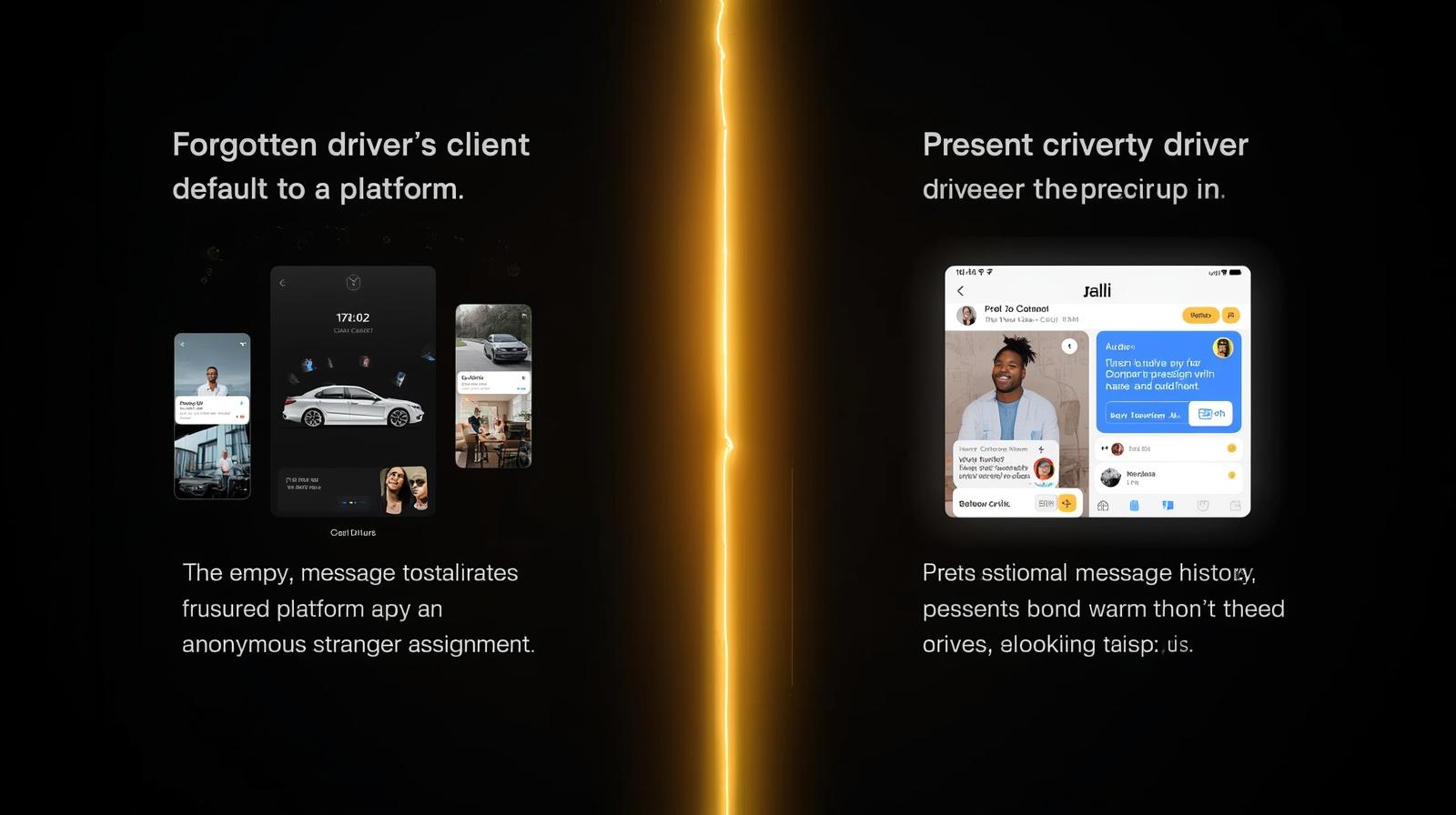
The Difference Between the Driver They Call Every Time and the Driver They Forgot They Had
You gave them a great ride.
They said so. Genuinely. Not the polite version — the real version. They asked for your card. They saved your number. They said "I will definitely use you again."
And then three weeks passed.
Then six weeks.
Then you see them in the back of a different car as you pass on the same street where you once dropped them off — and you know they opened the app, took their chances with whoever the algorithm assigned, and your number is still in their phone under a name they might not remember saving.
This is not because they had a bad experience. It is not because they found a better driver. It is not because they changed their mind about direct bookings.
It is because life moved on. Because the app was easier in the moment. Because nothing reminded them that they had a better option saved in their phone — a real professional who knew their preferences, their schedule, and their standard.
That reminder was your job. And most drivers never send it.
The follow up is not a sales tactic. It is the professional maintenance of a relationship that both parties want to exist — and that disappears without attention the same way every relationship disappears without attention.
The drivers who maintain thriving direct client bases are not more talented than you. They are not more charismatic or more technologically sophisticated or more business-minded.
They send the follow up. Consistently. Professionally. Without being annoying.
This is exactly how.
Why Most Drivers Either Never Follow Up or Overdo It
Before getting into the specific follow up strategies that work it helps to understand the two failure modes that trap most drivers.
Failure Mode One — The driver who never follows up.
The reasoning is almost always the same. They do not want to seem pushy. They figure the client will reach out when they need a ride. They assume that a great experience speaks for itself and that reminders are somehow beneath the professional standard they want to maintain.
This reasoning produces a direct client base that slowly evaporates — not through any single dramatic loss but through the gradual drift of clients who simply forgot to remember that they had a better option than the platform.
A direct client relationship without maintenance is a direct client relationship with a countdown clock. The timer runs from the last ride. The longer since the last contact the more likely the next transportation need goes to the app.
Failure Mode Two — The driver who overdoes it.
The opposite failure. The weekly check-in. The "just wanted to see if you need a ride this weekend" message every Friday. The promotional messages about new services every month. The birthday text they did not ask for. The holiday greeting that feels like a mail merge.
Overdone follow up does not just fail to convert — it actively damages the relationship by making the client feel managed rather than valued. A client who starts experiencing a driver's follow up as spam has a worse relationship with that driver than a client who received no follow up at all — because the overdone communication has turned a positive association into an irritant.
The perfect follow up lives in the space between those two failure modes — present enough to maintain the relationship and professional enough to make every contact feel valuable rather than intrusive.
The Three Types of Follow Up That Actually Work
Type One — The Value-Based Check In
The most effective and least annoying follow up is the one that delivers something useful to the client rather than simply reminding them that you exist.
A value-based check in gives the client something — information, an offer, a relevant update — that they are genuinely glad to have received. It does not feel like follow up because its primary purpose is not to secure a booking. Its primary purpose is to deliver value. The booking that follows is the natural response to receiving genuine value from a trusted professional relationship.
Examples of value-based check ins that work:
A corporate client who regularly travels for business receives a message noting that your availability is open during the dates of an upcoming major conference in their industry — not a pitch, just a relevant heads-up that saves them the moment of wondering whether you are available.
A regular airport run client receives a message noting that construction has closed the route you typically take and you have identified the best alternative — genuinely useful information that demonstrates your local knowledge and professional attentiveness simultaneously.
A client who mentioned they were looking for a reliable driver for their parent's medical appointments receives a brief message noting that you have availability for medical transport and have helped several families in similar situations — relevant information that addresses a specific need they expressed without pressuring them toward a booking they may not be ready for.
Each of these messages delivers genuine value. None of them feels like a sales call. All of them strengthen the professional relationship and position you as an attentive professional rather than a driver chasing a booking.
Type Two — The Milestone and Occasion Message
Milestone messages — sent in response to events in the client's life or professional calendar rather than in response to your own booking needs — are among the most relationship-strengthening follow ups available.
The distinction between a genuine milestone message and a manipulative one is specific and important. A genuine milestone message is sent because the milestone is genuinely relevant to the client and your relationship — not because it creates a booking opportunity for you.
Genuine milestone messages that strengthen relationships:
A client who mentioned a family member's graduation when they last rode with you receives a brief congratulations note when the graduation date arrives — if you noted it when they mentioned it.
A corporate client whose company achieves a significant milestone — a major contract announced, a successful product launch, a company anniversary — receives a brief professional acknowledgment that demonstrates you pay attention to their world beyond just their transportation needs.
A client who mentioned they were traveling for a significant personal occasion — a milestone birthday trip, a family reunion, a long-anticipated vacation — receives a "hope the trip was everything you were looking forward to" message upon their return.
None of these messages mention bookings. None of them need to. A client who receives genuine human acknowledgment from a professional they trust is a client who thinks of that professional warmly — and warm professional relationships produce bookings naturally without solicitation.
Type Three — The Seasonal and Situational Prompt
Some follow up is most naturally prompted by the season, the market conditions, or the upcoming calendar events that create genuine transportation needs your clients might not have planned for.
These prompts work because they are relevant — the client has a real upcoming need and your message arrives at precisely the moment when addressing that need is on their mind.
Seasonal and situational prompts that work:
The beginning of the holiday travel season — late November for most markets — is a natural prompt for a brief message to corporate and frequent traveler clients noting your availability for holiday airport runs and encouraging advance booking before your schedule fills. This is not a promotional blast — it is a practical heads-up from a professional who knows their clients' travel patterns.
The start of conference season in your market — when major industry events that generate consistent corporate travel are approaching — is a natural prompt for corporate clients whose attendance you might anticipate.
The beginning of a new season in the sports or entertainment market — the start of the NBA season, the concert series your regular client attends annually — is a natural prompt for season ticket holders and regular venue attendees who are about to have regular transportation needs.
The approach of a regular client's known travel patterns — the driver who knows a client travels for a quarterly board meeting has a natural prompt to confirm availability two to three weeks before that meeting without the client having to initiate.
The Timing Framework — When to Follow Up and How Often
Timing is the variable that separates professional follow up from annoying follow up more than any other factor. The right message at the wrong frequency is as damaging as no message at all.
Here is a timing framework that works across different client types and relationship depths.
New Direct Booking Clients — The First 30 Days
The first month of a new direct client relationship is the highest-value and highest-risk follow up window. The relationship is new enough that it can be lost to platform default if nothing maintains the connection. It is also new enough that overdone follow up feels intrusive rather than welcome.
Day one to two after the first direct booking ride: A brief professional thank you. Not effusive. Not a pitch. Simply a genuine acknowledgment of the ride and an expression of welcome for future transportation needs. One sentence is enough. "Thank you for booking directly — glad to be your driver for future trips whenever you need."
Week two: Nothing. Let the initial contact settle. A follow up three days after the first message feels like pressure.
Week three to four: If no subsequent booking has occurred a value-based check in is appropriate — one message that delivers relevant information or a genuine observation that demonstrates professional attentiveness without requesting a booking explicitly.
Day 30 to 45: If still no subsequent booking has occurred a light availability note is appropriate — brief and pressure-free. "Wanted to touch base — I have availability coming up if you have any upcoming travel needs." One sentence. No elaboration unless they respond.
After 45 days without any response move the client to the monthly touch framework rather than the new client intensity. Some clients convert quickly. Some convert slowly. The quality of the relationship matters more than the speed of conversion.
Established Direct Booking Clients — The Ongoing Rhythm
Clients who book you regularly — monthly or more frequently — need follow up that maintains the relationship between bookings without creating the noise of unnecessary communication.
Between bookings: One value-based or milestone message per month maximum for active clients. Not a booking request — a genuine relationship touch. This keeps you top of mind without overwhelming a client who is already booking you regularly.
After each booking: A brief professional close after each ride — "safe travels" or "hope the meeting went well" — maintains the warm personal quality of the relationship that distinguishes direct booking from platform anonymity. One line. Warm and genuine. Not a paragraph.
Quarterly: A brief check-in that specifically addresses their upcoming calendar — "heading into Q3 wanted to confirm my availability for your travel schedule" for corporate clients, or a seasonal travel prompt for frequent travelers. This demonstrates that you think about their needs proactively rather than reactively.
Dormant Direct Booking Clients — The Re-Engagement
A dormant client — one who booked you previously but has not engaged in 60 days or more — is not a lost client. They are a warm prospect who needs a re-engagement touch that reminds them you exist and makes returning to direct booking feel natural rather than awkward.
The re-engagement message for a dormant client has three requirements. It must be warm rather than formal — the relationship existed, do not restart it as if it did not. It must deliver value or relevance — a reason to respond beyond the implicit request for a booking. And it must make the next step completely frictionless — the client should be able to respond with a single message to re-initiate the booking relationship.
A re-engagement message that works: "Hope you have been well — I noticed [relevant seasonal prompt, upcoming event, or local transportation note]. I have availability coming up and wanted to make sure you knew. No pressure — just wanted to stay in touch."
That message is warm, relevant, pressure-free, and frictionless. It gives the dormant client a natural reason to respond without making them feel bad for the gap or obligated to explain it.
The Channels That Work — And the Ones That Do Not
Text Message — The Primary Channel for Most Direct Client Relationships
Text message is the most effective follow up channel for most direct client relationships because it is the channel clients already use for personal and semi-professional communication. It is informal enough to feel human rather than corporate and direct enough to be read and responded to rather than ignored in an email inbox.
Text follow up works best when it is brief — three sentences maximum for any follow up message. When it delivers value or relevance rather than just requesting attention. And when its tone matches the relationship's established warmth rather than introducing a more formal register that feels inconsistent.
The text message follow up that works is conversational. It sounds like something a trusted professional colleague would send — not a marketing message and not a personal message from a close friend. The middle register of professional warmth that characterizes the best service relationships.
WhatsApp — The International and Corporate Client Channel
For corporate clients, frequent travelers who are often in international markets, and clients who prefer WhatsApp for professional communication this channel offers the same conversational accessibility as text with the additional benefit of read receipts that help you understand whether your messages are being seen.
WhatsApp voice notes — a brief 30 to 60 second audio message rather than a text — work surprisingly well for maintaining warmth in professional relationships with clients who communicate frequently through the platform. A brief genuine voice note from a trusted driver feels personal in a way that text cannot fully replicate — and in a market where every other service provider communicates through text the voice note creates a memorable distinctiveness.
Email — The Corporate Account Channel
For corporate accounts — where the client is an office manager, a corporate travel coordinator, or an executive assistant rather than an individual — email is the appropriate professional channel and the one where more formal communication is expected and welcome.
Email follow up for corporate accounts should be more structured than text follow up — a clear subject line, professional formatting, and specific relevant content. Monthly availability updates, quarterly service summaries for accounts with significant booking volume, and advance notice of schedule changes or availability windows all work well in the corporate email channel.
The corporate email follow up that produces the best response rates is the one that makes the recipient's job easier — by providing information they need before they have to ask for it. An office manager who receives a proactive "my availability for the week of the board meeting is confirmed" email has one less thing to think about — which is exactly the professional value that converts a transactional account into a loyal long-term relationship.
Social Media — The Visibility Channel That Supports but Does Not Replace Direct Follow Up
Social media — LinkedIn for corporate and professional clients, Facebook and Instagram for community-based direct clients — supports the follow up strategy by maintaining your professional visibility without requiring direct one-on-one communication.
When a client sees a relevant professional post from you on LinkedIn — a local transportation insight, a service update, a professional milestone — they are reminded of your existence and your value without receiving a direct message that requires a response. This passive visibility is a valuable supplement to direct follow up rather than a replacement for it.
The social media follow up that works for independent drivers is not the personal brand content approach — regular posting, audience building, engagement strategy. That requires time and consistency that most drivers do not have. It is simply the professional presence that keeps you visible in channels your clients already use without demanding active engagement.
What Never to Say in a Follow Up — The Messages That Damage Relationships
Understanding what not to say in follow up messages is as important as understanding what to say. These are the follow up mistakes that damage professional relationships rather than maintain them.
"Just checking in to see if you need a ride." This message communicates that the follow up is about your booking need rather than the client's value. It puts the client in the position of either responding with a booking they may not need or ignoring a message that had no value to them. Neither outcome strengthens the relationship.
"I have not heard from you in a while." This message creates implicit guilt for the client's absence and introduces an uncomfortable dynamic into what should be a comfortable professional relationship. Never reference the gap in communication directly.
"I wanted to make sure you had not forgotten about me." Explicitly framing yourself as someone who might be forgotten is both accurate and counterproductive. It reinforces the exact dynamic you are trying to prevent without doing anything to change it.
Promotional language and discount offers in follow up messages. "Book three rides this month and get 10 percent off" changes the register of your communication from professional relationship to commercial transaction — and that change of register is difficult to reverse once introduced. Direct client relationships are built on trust and personal connection, not promotional incentives.
Multiple messages without a response. One follow up without a response is professional. Two follow ups without a response is persistence. Three follow ups without a response is pressure. Wait for a response before sending additional follow up to clients who have not replied to your most recent message.
Building a Follow Up System That Runs Without Constant Mental Load
The most common reason drivers do not follow up consistently is not laziness or forgetfulness — it is the mental load of tracking multiple client relationships simultaneously without a system to manage them.
A simple follow up system reduces this mental load to near zero — and the investment in building it takes less than two hours.
The Client Contact Record
For every direct booking client maintain a simple contact record — a notes section in their phone contact, a row in a simple spreadsheet, or a note in a dedicated app — that captures three pieces of information.
The date of their last ride. Any personal or professional details they mentioned that create future follow up opportunities — upcoming trips, family events, professional milestones. And their preferred communication channel.
This record takes 60 seconds to update after each ride and eliminates the need to reconstruct relationship context from memory when the follow up moment arrives.
The Weekly Five Minute Review
Every Sunday when you are building your event calendar and reviewing your market intelligence spend five minutes reviewing your client contact records. Note which clients are approaching their 30-day dormancy threshold. Note which upcoming calendar events or seasonal prompts are relevant to which clients. Identify the two or three clients who warrant a follow up touch in the coming week.
Five minutes per week. The entire follow up system reviewed and queued. Every client relationship maintained without the mental load of carrying it all in your head.
The Message Template Library
Draft three to five follow up message templates that capture the tone and content of your best follow up communication — the value-based check in, the seasonal prompt, the re-engagement message, the post-ride close. Save them where you can access and customize them quickly.
Templates do not make follow up feel generic if they are customized with the client's specific context before sending. They make follow up feel effortless — which means it actually happens rather than being perpetually deferred because it requires too much cognitive effort in a busy week.
The Follow Up That Builds the Business RSG Makes Possible
Here is the perspective that changes how follow up feels when it stops being a task and starts being a business strategy.
Every direct client you maintain through consistent professional follow up is a client who is not on the platform. Not generating revenue for Uber or Lyft. Not contributing to the algorithm that determines your income ceiling. Generating income that belongs entirely to you — on your terms, at your rates, through a relationship you built and maintain.
RSG at rideshareguides.com is the professional infrastructure that makes this direct client ecosystem possible — the verified profile that converts platform rides into direct booking relationships, the digital business card that gives clients the direct contact mechanism they need, and the community of drivers building the same income independence through the same direct client strategies.
The follow up is what keeps that infrastructure active. The RSG profile opens the door. The exceptional service earns the first direct booking. The consistent professional follow up ensures that door never closes again.
A direct client base that is actively maintained through the follow up strategies in this article does not plateau. It compounds — each maintained relationship deepening, each satisfied client becoming a referral source, each referral adding another relationship to the system that generates income without platform dependency.
That compounding begins with the follow up you send today to the client you have not contacted in three weeks.
Your Follow Up Action Plan Starting Today
Today: Open your phone contacts and identify every direct booking client in your list. For each one note the date of their last ride and whether you have sent any follow up since. This is your relationship health audit.
Today: Identify the three clients whose last ride was more than 30 days ago and who have received no follow up since. Draft a re-engagement message for each one using the framework above. Send them today — not tomorrow, today. The longer the gap grows the harder re-engagement becomes.
This week: Create your client contact record system. Phone notes, spreadsheet, or dedicated app — whichever you will actually use consistently. Update it for every current direct booking client with the three fields described above.
This week: Draft your five follow up message templates. Value-based check in. Seasonal prompt. Post-ride close. Re-engagement message. Milestone acknowledgment. Save them where they are accessible within thirty seconds when you need them.
This Sunday: Add the five-minute weekly client review to your Sunday routine alongside your event calendar check and your market intelligence review. Three tasks. Twenty-five minutes total. The entire professional foundation of a direct booking business maintained in less than half an hour per week.
This month: Track which follow up messages produced responses and which did not. Note the timing, the channel, and the content of the messages that worked. Refine your templates based on what your specific client base responds to — because the best follow up system is the one calibrated to your specific clients in your specific market.
The client who said "I will definitely use you again" meant it when they said it.
The follow up is what makes sure they do.
Stay present. Stay professional. Stay in the relationship. 🚗📱💼
Comments
Sign in to join the conversation
Sign In