How AI Tools Are Helping Rideshare Drivers Earn More and Work Smarter in 2026
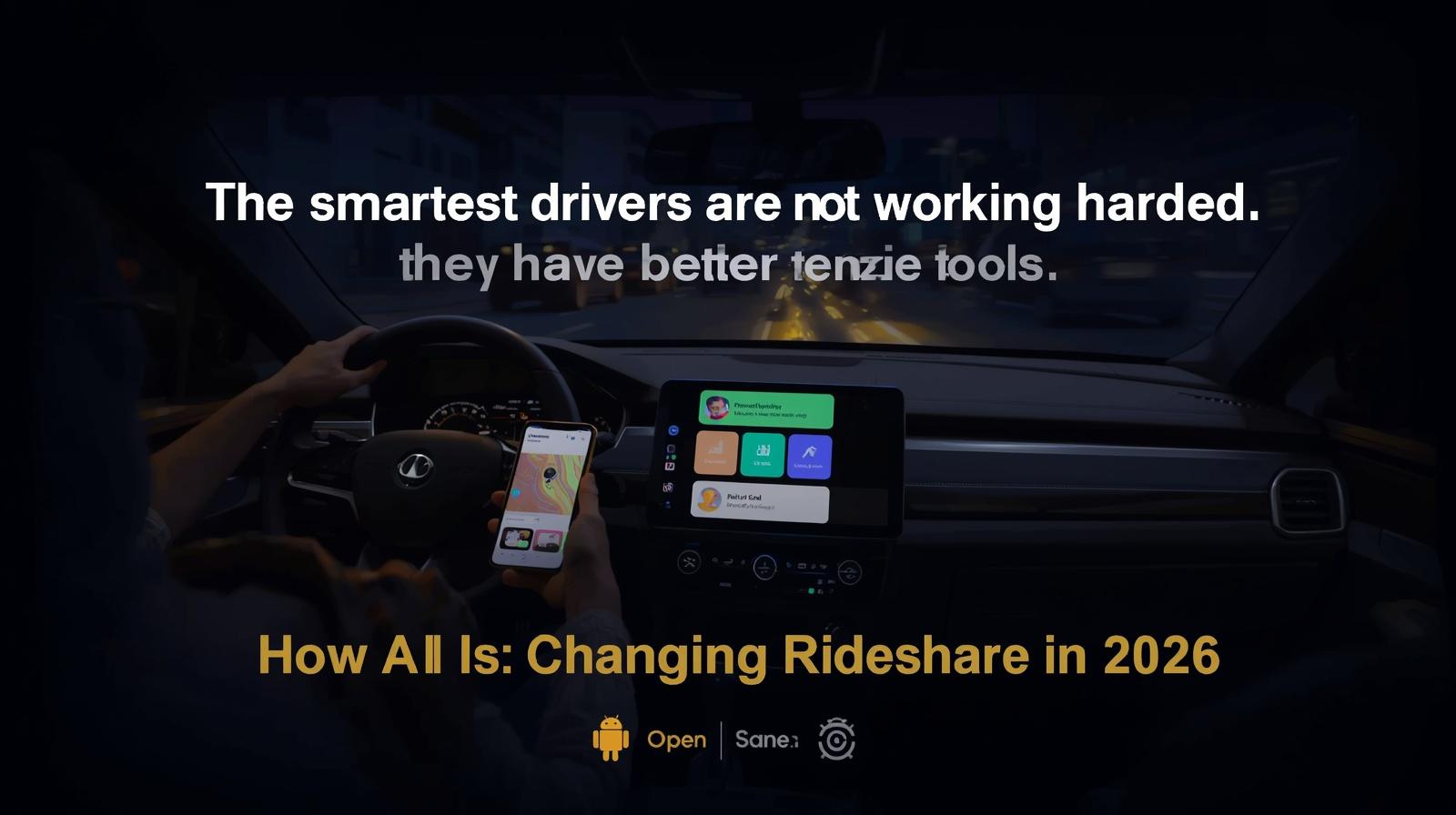
The Smartest Drivers in Your Market Are Not Working Harder. They Have a Different Toolkit.
Something changed quietly in rideshare markets across the country over the past eighteen months.
The drivers consistently outperforming their peers in the same zones at the same hours are not necessarily the most experienced. They are not always the ones with the best vehicles or the longest track records. Many of them have been driving for less than two years.
What they have is a set of AI-powered tools that the majority of drivers do not know exist — tools that analyze demand patterns, predict surge windows, optimize positioning decisions, manage client communications, and handle the administrative tasks that consume hours every week for drivers who are still doing everything manually.
Artificial intelligence has entered the rideshare driver's toolkit in ways that are practical, affordable, and immediately applicable — and the gap between drivers who are using these tools and drivers who are not is widening every month.
This is what the tools actually are, what they actually do, and how to use them starting this week.
AI-Powered Demand Prediction and Positioning
The most direct application of AI to rideshare earnings is demand prediction — using machine learning analysis of historical patterns, current events, weather data, and real-time market signals to predict where surge conditions will develop before they appear on the platform map.
Gridwise has evolved from a basic earnings tracker into a genuinely AI-powered market intelligence platform. Its demand prediction features analyze your specific market's historical patterns alongside current event data and weather forecasts to produce shift-by-shift recommendations for positioning — not where the map is currently hot but where it is about to be hot.
Drivers using Gridwise's AI positioning recommendations in markets where the tool has sufficient historical data report measurable improvements in surge capture rates compared to reactive positioning alone. The improvement is most pronounced for drivers who had previously relied entirely on platform heat maps — which show current conditions rather than predicted conditions.
Samsara and similar fleet intelligence platforms have developed consumer-accessible AI tools that analyze driving patterns, route efficiency, and earnings per mile to identify the specific decisions that are reducing income without the driver being aware of them. An AI analysis of three months of driving data that identifies a consistent deadhead pattern that costs $40 per week in unnecessary fuel and time is worth significantly more than its subscription cost.
AI for Direct Client Communication and Follow Up
This is the application most independent drivers underestimate — and the one that produces the most consistent income impact for drivers building direct booking businesses.
Managing direct client relationships requires consistent professional communication — the follow up messages, the booking confirmations, the value-based check ins, the re-engagement touches for dormant clients. Done manually this communication takes significant time and requires the kind of professional writing skill that not every driver naturally has.
AI writing tools change this entirely.
ChatGPT and Claude — the two most widely used AI writing assistants — can draft professional follow up messages, booking confirmation templates, corporate account introduction emails, and re-engagement messages in seconds based on a brief description of the situation. A driver who tells the AI "write a professional follow up message to a corporate client I have not contacted in six weeks who previously booked me for monthly airport runs" receives a polished professional message that they can send as-is or personalize with specific details.
The quality difference between an AI-drafted professional communication and a manually written one from a driver who is not a natural writer is immediately apparent to corporate clients and direct booking prospects — and that quality difference directly affects conversion rates.
AI email scheduling tools like Boomerang and Streak integrate with Gmail to automate the timing of client follow up messages — ensuring the right message arrives at the right moment without requiring the driver to manually track and send every communication. A driver who sets up automated follow up sequences for new direct booking clients ensures that no client falls through the cracks regardless of how busy the driving schedule becomes.
AI for Financial Management and Tax Optimization
The administrative burden of rideshare financial management — expense tracking, mileage logging, tax estimation, deduction identification — has been dramatically reduced by AI-powered financial tools that automate what previously required hours of manual work.
Keeper Tax — an AI-powered tax deduction finder specifically designed for gig workers and self-employed individuals — connects to bank accounts and analyzes transactions automatically to identify deductible expenses that manual tracking frequently misses. Its AI engine is trained on self-employment tax rules and consistently surfaces deduction categories — the subscription services, the bank fees, the cleaning supplies, the professional development expenses — that drivers who track manually often overlook.
Users report finding an average of $1,200 to $1,800 in additional deductions per year that they had not previously claimed — making the tool's subscription cost of approximately $20 per month one of the most financially efficient purchases available to any self-employed driver.
Fyle and Expensify use AI receipt scanning that extracts expense data from photographed receipts automatically — categorizing expenses, calculating tax-deductible percentages, and generating organized expense reports without requiring any manual data entry. For a driver who previously spent 30 minutes per week organizing receipts these tools eliminate that time entirely.
AI for Route and Schedule Optimization
Beyond positioning strategy AI tools are beginning to optimize the specific routes and shift timing decisions that determine earnings efficiency at the micro level.
Google Maps and Waze now incorporate AI traffic prediction that goes beyond current conditions to anticipate traffic patterns 30 to 60 minutes ahead — allowing drivers to route proactively around developing congestion rather than reactively around existing jams. For drivers whose shifts involve frequent airport runs and venue pickups this predictive routing reduces trip times measurably.
Shift scheduling AI — tools like When I Work and Deputy that were originally designed for traditional businesses — can be repurposed by independent drivers to analyze their own earnings data and generate optimal shift schedules based on historical income patterns, upcoming events, and personal availability preferences. A driver who feeds three months of earnings data into an AI scheduling tool receives a shift recommendation that maximizes expected earnings within their available hours — replacing the intuitive but often suboptimal scheduling most drivers currently use.
AI for Professional Profile and Marketing
For drivers building direct booking businesses AI tools have made professional marketing accessible without requiring marketing expertise or significant time investment.
AI profile optimization tools like Jasper and Copy.ai can analyze a driver's current professional profile and generate optimized versions that are more compelling to corporate clients, more searchable in relevant platforms, and more likely to convert profile visitors into booking inquiries. A driver who pastes their current RSG profile description into an AI optimization tool and asks for a more professional and client-focused version typically receives a meaningfully better result in under two minutes.
Canva's AI image generation — Magic Media — creates professional cover photos, marketing materials, and social media graphics from text descriptions without requiring any design skill. The blog cover photo prompts described throughout this guide can be executed directly in Canva using the AI generation feature rather than requiring stock photo searches or original photography.
AI review response tools help drivers craft professional responses to client reviews and feedback — particularly useful for responding to negative feedback in a way that demonstrates professionalism and accountability rather than defensiveness.
The AI Tool Stack for 2026 — What to Use and When
The complete AI toolkit for a serious independent driver does not require subscribing to every tool simultaneously. A prioritized adoption sequence produces the best return on both investment and learning time.
Start immediately — free tools:
ChatGPT free tier for professional communication drafting. Google Maps AI traffic prediction is built into the free app. Canva free tier for AI-assisted marketing materials.
Add in month one — low cost high impact:
Gridwise for AI demand prediction and market intelligence — approximately $10 per month. Keeper Tax for AI-powered deduction identification — approximately $20 per month.
Add when direct booking business is established:
AI email scheduling tools for client follow up automation. AI profile optimization tools for direct booking conversion improvement.
Consider when managing significant client volume:
AI scheduling optimization for complex multi-client calendar management. CRM tools with AI features for professional client relationship management.
The Human Element That AI Cannot Replace
Here is the perspective that keeps AI tools in their correct place in the independent driver's toolkit.
AI tools optimize the business operations around the service. They cannot deliver the service itself.
The water bottle that was there before the passenger asked. The driver who recognized early nausea and pulled over without being asked. The professional who waited at the door until the elderly passenger was safely inside. The follow up message that remembered the client's daughter's graduation. The corporate relationship built through demonstrated reliability over dozens of consecutive flawless pickups.
These are human acts that no AI tool produces. They are the foundation of the five-star ratings, the direct booking conversions, and the referral relationships that the AI tools then help manage, optimize, and scale.
The drivers using AI tools most effectively in 2026 are the ones who understand this distinction precisely. They use AI to eliminate the administrative friction that wastes time and to optimize the strategic decisions that determine positioning and income. They then invest the time and attention that AI frees up into the human service delivery that no tool can replicate.
RSG at rideshareguides.com is the professional infrastructure that connects AI-optimized operations with human-quality service delivery — the verified profile that AI-drafted communications direct clients toward, the direct booking system that AI scheduling tools help manage, and the professional identity that AI marketing tools help present to the corporate and premium clients who are most valuable to an independent driver's long-term income
Comments
Sign in to join the conversation
Sign In