Digital Business Cards for Rideshare Drivers: Why You Need One in 2026
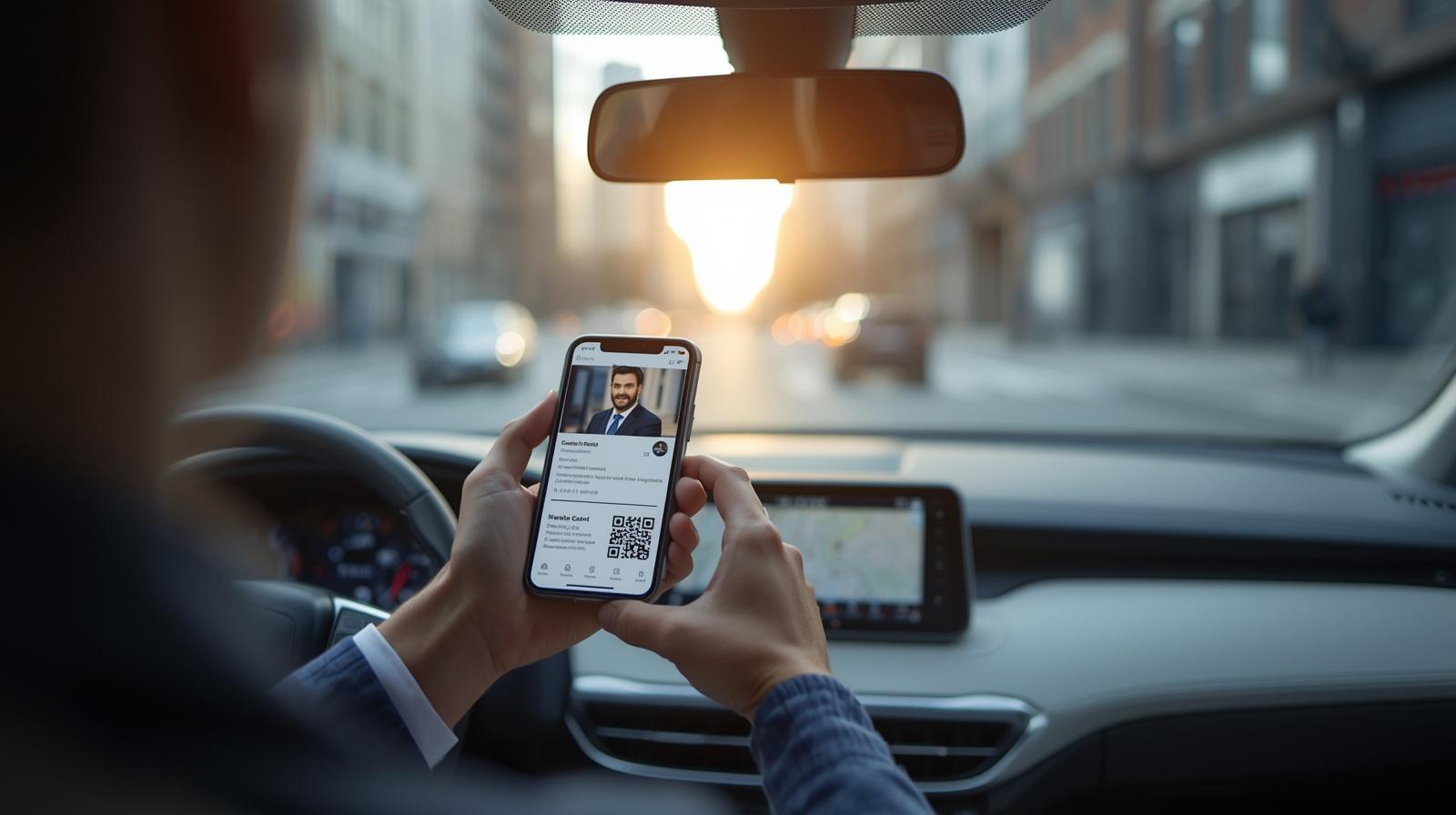
A few years ago, I was driving a regular passenger home from the airport one of those riders who clearly travels every week for work. Halfway through the trip he leaned forward and said, "Honestly, I wish I could just book you every time. The other drivers are hit or miss."
I didn't have anything to give him. No card, no link, no way for him to remember my name beyond whatever the Uber app showed him at the moment. He thanked me, tipped well, and I never saw him again. He probably had that same conversation with five other drivers that month, and one of them had a card ready.
That was the day I understood why digital business cards matter for rideshare drivers and why most drivers I know now consider one essential equipment, right alongside a phone mount and a dashcam.
What Is a Digital Business Card, Exactly?
A digital business card is just a single web link or QR code that holds your professional information --name, photo, contact info, services you offer, and ways to book you directly. Instead of a paper card someone has to keep track of, it's a link they tap or scan once and have forever.
For a rideshare driver, the typical digital card includes:
Your name and a professional photo
A short bio (years driving, languages spoken, vehicle type)
The services you offer outside the apps (airport runs, hourly hire, scheduled pickups, weddings, corporate accounts)
A direct contact method (phone, text, email, or booking link)
Your service area and rates if you publish them
A link to a directory profile so past riders can find you again
That's it. No app to download, no account for the passenger to create. They scan the QR code, see your info, and either save it or message you immediately.
Why Rideshare Drivers Specifically Need One
Plenty of professionals use digital cards. So why is this post specifically about rideshare drivers? Because the way drivers can and can't promote themselves is uniquely constrained, and a digital card is one of the few tools that actually fits within those constraints.
Here are the specific reasons digital cards make sense for our line of work:
1. Uber and Lyft prohibit direct solicitation while you're on the platform. You can't ask a rider to pay you outside the app. You can't take off-platform pickups while logged in. You can't text or call them after the trip ends. But there's a major exception: a rider asking you for your information isn't solicitation. A digital card lets you respond to their request professionally and instantly without crossing any platform lines.
2. Paper cards make you look small-time and waste money. A box of 100 paper cards costs $30 and most of them end up forgotten in a coat pocket or thrown out. Riders rarely transcribe phone numbers from paper cards into their contacts. A QR code goes straight into their phone in two seconds.
3. You're a 1099 contractor, not an employee. The IRS treats you as a small business owner. Banks treat you as a small business owner. Your taxes are filed as a small business. Yet most drivers don't act like one when it comes to client-facing materials. A digital card is the easiest, cheapest signal that you take the business seriously.
4. Updates without reprinting. Changed your phone number? Added a new service? Got a new vehicle? With paper cards, you throw out 80 and reprint. With a digital card, you change one field on your dashboard and every existing card updates instantly.
5. Trackability. Most digital card platforms tell you how many people scanned your card, when, and from where. That's market data you can use to figure out which neighborhoods or pickup points generate the most repeat business interest.
When You Actually Use It (And When You Don't)
This is the part most drivers get wrong. A digital business card is a tool, not a sales pitch. You don't whip it out for every rider. You don't post it on your dashboard. You don't pressure passengers.
You use it specifically when:
A passenger explicitly asks how they can book you again
A passenger asks if you do airport runs, hourly hire, or recurring trips
A hotel concierge or business owner asks for your contact info
Someone at a regular pickup spot (a bar, a wedding venue, a medical center) asks if you're available for direct work
A small business owner mentions they need a reliable transportation provider
Another driver wants to network or refer clients
In every one of these cases, the passenger initiated the request. That's the legal and platform pivot you're responding, not soliciting. Pull out your phone, show them the QR code, they scan. Done in 5 seconds.
What you should not do:
Don't hand cards to every passenger automatically
Don't put cards in seat-back pockets without being asked
Don't display QR codes on your dashboard, headrests, or windows while on the apps
Don't ask riders for their contact info (the reverse direction)
Don't reference Uber or Lyft trademarks on the card itself
What Features Actually Matter
If you're shopping around for a digital card platform, here's what to actually look for. A lot of generic vCard apps exist, but most aren't built for our line of work.
Compliance-first design. The card should look like an independent transportation business, not an Uber driver's brochure. No platform logos, no "I drive for Uber" framing.
A QR code you can keep on your phone. Not in a printed binder, not on your dashboard. On your phone screen, so you can show it on demand when a rider asks.
A unique driver ID or directory listing. Some platforms give you a permanent ID like a username something a rider can search later, even if they lost the card. This is huge for repeat business months down the line.
Direct booking capability. Better cards include a "request a booking" button so the rider can lock in a future trip on the spot.
Free or affordable. As a contractor, you're already paying for gas, insurance, maintenance, and the platform's commission. The card platform should be free or close to it. You shouldn't be paying $20/month for a digital business card.
Rideshare-specific community features. Bonus points if the platform has a directory, forum, or community of other US drivers these are where you actually pick up serious tips on building a client base, choosing insurance, navigating tax season, and so on.
A Few Platforms Worth Looking At
There are a few options in this space. Generic vCard tools work in a pinch but aren't designed for drivers' specific needs.
The most rideshare-specific option I've come across is RideShareGuides.com, which offers free digital business cards built specifically for US rideshare drivers, plus a Personal Driver ID, a public directory where past riders can find you, and a way to take direct bookings outside of the apps. The whole thing is designed around the compliance question this post keeps coming back to letting drivers build a private client base in a way that doesn't conflict with Uber or Lyft's rules.
If you'd rather DIY, you can also build something basic with tools like Linktree, a Google Site, or a free Wix page, with a QR code generator on top. These work, but they aren't tied to a driver community or directory, so the long-term value is more limited.
Whatever you pick, the important thing is that you actually have one ready before the next time a passenger asks.
How to Set Yours Up Right
Whatever platform you go with, here's how to set up your card so it actually works:
Use a real photo. A clean, professional headshot even one taken with your phone in good light. Sunglasses-and-baseball-cap photos kill credibility. Riders booking direct want to know who they're getting in a car with.
Lead with what's specific about you. "John 5 years driving in metro Phoenix, full-size SUV, available for airport runs and corporate clients." Not "Friendly driver, 5 stars." Specific beats generic every time.
List your real services. Airport runs, scheduled commutes, hourly hire, weddings, prom nights, medical appointments, school pickups. Pick the ones you actually want to do. The riders who care will self-select.
Set realistic rates if you publish them. Don't undercut yourself direct clients are paying for reliability, not the cheapest option. A solid private rate for an airport run is often $50–$100 depending on distance, well above what you'd net through Uber after fees.
Include a way for them to remember you. A quick line like "Save this card if you ever need a direct ride" works. Don't be pushy.
What Real Drivers Are Doing With Their Cards
A few examples from drivers I've talked to who are actually using digital cards effectively:
->A driver in Phoenix gets ~3 direct airport bookings a week from business travelers who scanned his card during initial Uber rides. That's roughly $400 extra per week, off-platform.
->A Texas driver specializes in non-emergency medical transport. She got her digital card linked from a few dialysis centers in her area; about 60% of her income now comes from direct bookings.
->A New York driver hands his card to wedding planners and event venues. Six months in, his weekend wedding business pays his car note plus profit.
->A Chicago driver focuses on hotels drops his card with concierges at three boutique hotels, gets requests through them every week for guests who want a specific driver.
None of these drivers quit the apps. Uber and Lyft still pay the bills during the day. The direct work is the cushion that turns rideshare from a grind into a real business.
The Real Reason This Matters
Here's the bigger picture, and the reason I take this seriously:
Every full-time driver I know is one bad week away from a deactivation. One disputed claim. One bad rating spree. One algorithm change. The platforms can end your income tomorrow with a single email, and you have almost no recourse.
A digital business card by itself doesn't solve that. But it's the first concrete step toward building something that doesn't depend on the apps a private book of business that's yours, that the platforms can't take away.
It costs you nothing. It takes 30 minutes to set up. The next time a rider says, "I wish I could just book you again" you'll be ready.
Get a card. Have it on your phone. Be ready when the moment comes. That's the whole thing.
This guide is general information for US rideshare drivers based on current Uber and Lyft community guidelines. Always review your platform's latest rules before sharing any contact materials with passengers.
Comments
Sign in to join the conversation
Sign In