Can You Remove an Unfair Rating on Uber or Lyft? Yes — Here's How
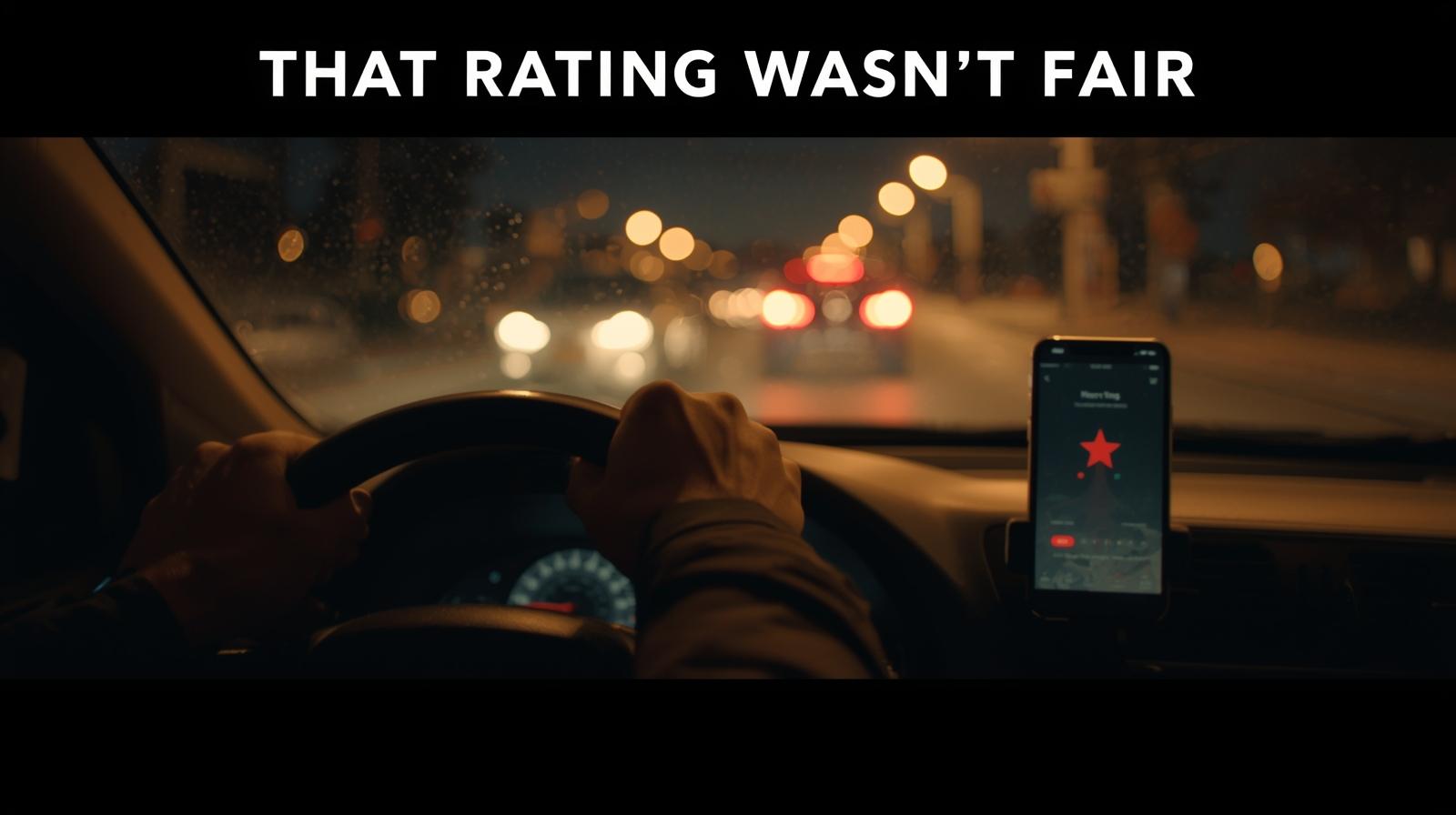
The Rating on Your Profile Isn't Always Yours to Earn
You did everything right. Clean car. Smooth ride. Friendly close. Five stars in your head before the passenger even opened the door.
Then the notification hits. A 1-star review. No comment. No explanation. Just a number that chips away at the score you've spent months building.
Every rideshare driver has been there. And most of them do the same thing — they stare at it, feel the frustration, and then accept it like it's permanent.
It isn't. Here's what to actually do about it.
Why Unfair Ratings Happen More Than You Think
Before disputing anything, it helps to understand where bad ratings actually come from — because most of them have nothing to do with your driving.
A passenger had a bad day before they ever got in your car. They were running late and the app showed a longer ETA than expected — that's on the algorithm, not you, but you wear the score. They expected a luxury vehicle and got a standard. They were charged a cleaning fee on a previous ride and took it out on the next driver. They simply hit the wrong star by accident and never corrected it.
Platforms know this happens. Which means they have processes in place for it — processes most drivers never use because nobody told them they exist.
What Qualifies as a Disputable Rating
Not every bad rating can or should be disputed. But these situations have a strong case:
The passenger was a no-show. If you arrived, waited the required time, and the passenger never appeared — any rating left after that interaction is retaliatory by definition. Document your arrival with a screenshot of the app showing your wait.
The passenger was intoxicated or aggressive. If you reported the incident through the app at the time, that report becomes evidence. A bad rating following a documented safety incident is one of the strongest dispute cases you can make.
The rating contradicts the ride data. If your GPS shows a clean, direct route with no complaints during the trip, a 1-star with no comment is a legitimate dispute candidate. The data tells a story.
The passenger left a comment that violates platform policies. Discriminatory language, false accusations, or threats in a review give you direct grounds for removal — not just a score adjustment.
You received the rating after cancelling for safety reasons. If you cancelled because of a threatening situation and reported it immediately, any resulting rating is disputable.
The Step-by-Step Dispute Process That Actually Works
Step 1 — Screenshot Everything Before You Do Anything
The moment you see a suspicious rating, document it. Screenshot the trip details, the rating, any comments, and the timestamp. Once you're inside the dispute process, having this evidence ready separates drivers who get results from drivers who get a copy-paste rejection email.
Step 2 — Go to the Right Place in the App
Both Uber and Lyft bury their dispute options but they exist.
On Uber: Go to Help → Trip Issues and Refunds → find the specific trip → select the issue that matches your situation. For rating disputes specifically, look under "I had a different issue" and describe it clearly.
On Lyft: Go to the ride in question → Get Help → select the relevant issue. For ratings, use the feedback and safety reporting options directly tied to that trip.
Do not contact general support first. Going directly to the specific trip is faster and creates a proper paper trail.
Step 3 — Write Your Dispute Like a Professional, Not a Frustrated Driver
This is where most drivers lose before they even start. They write emotional messages. They complain about fairness. They use words like "obviously" and "clearly" — which immediately signal that the message is venting, not a formal dispute.
Write it like this instead:
State the trip date, time, and trip ID at the top. Describe what happened factually, in sequence, without emotional language. Reference any evidence you have — screenshots, prior reports, GPS data. State specifically what you are requesting — rating removal, account review, or safety flag on the passenger.
Short, factual, and specific wins. Long and emotional loses.
Step 4 — Follow Up Exactly Once
If you don't hear back within 48 hours, follow up once with a brief message referencing your original ticket number. One follow-up signals persistence. Multiple follow-ups get your ticket deprioritized.
Step 5 — Escalate If the First Response Is a Rejection
Both platforms have escalation paths that most drivers never use.
On Uber, you can reply directly to the support response and request escalation to a senior agent. Use the phrase "I am requesting this be reviewed by a senior support specialist" — it triggers a different review process than a standard reply.
On Lyft, if your first dispute is rejected, you can submit a formal feedback report through their safety team if the incident involved passenger behavior. Safety-flagged disputes get reviewed separately from general support tickets.
If you have documented evidence that directly contradicts the rating and both escalation paths fail, filing a Better Business Bureau complaint against the platform occasionally produces results — not because the BBB has enforcement power, but because platforms respond to formal complaints to protect their ratings.
The Long Game: Protecting Your Score Before Problems Hit
Disputing ratings is important. But the drivers with the most stable scores aren't just good at disputing — they're good at building a buffer so one bad rating barely moves the needle.
Maintain a score well above the platform minimum so a single 1-star has minimal impact mathematically. The difference between a 4.95 and a 4.78 isn't just pride — it's how much damage one rogue review can actually do.
Use the in-app compliment and feedback features after every positive interaction. Positive signals on your account strengthen your standing when you do submit a dispute — support agents can see your full history.
Report passenger issues in real time, not after the fact. A report filed during or immediately after a ride carries far more weight than one filed two days later when you notice the rating dropped.
The Bigger Picture Most Drivers Miss
Here's something worth sitting with. Every hour you spend managing platform ratings is an hour you're working inside a system designed to keep you dependent on their score, their algorithm, and their rules.
The drivers who stress least about ratings in 2026 aren't the ones who got better at disputing. They're the ones who built enough direct clients that a bad week on the platform doesn't define their income.
When a passenger books you directly — knowing your name, your vehicle, your record — they don't leave anonymous 1-star reviews. They're in a relationship with you, not rating a transaction.
RSG at rideshareguides.com gives drivers exactly that foundation — a verified professional profile, a digital business card, and a direct booking system that puts you in control of your own reputation. The drivers building there are finding that platform ratings matter less every month — not because they stopped caring, but because they stopped depending.
What To Do Right Now
Go back through your last 90 days of ratings. If anything looks out of place — a sudden drop, a 1-star with no comment after a clean ride — open the dispute process today. Most platforms have a window for how far back you can submit.
Then start building the buffer. Not just in your score. In your independence.
The rating system isn't fair. But it's also not the only game in town anymore.
Know your worth. Document everything. Build something they can't rate. 🚗
Comments
Sign in to join the conversation
Sign In